


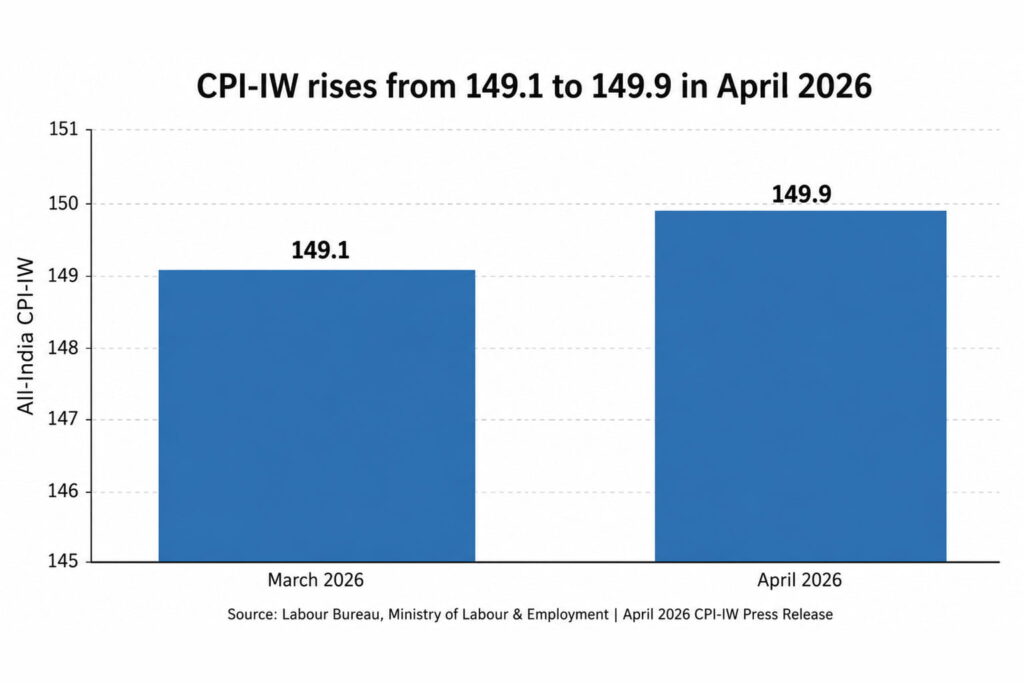
The latest AICPIN data for April 2026 has been released, and it has again brought Dearness Allowance discussion into focus for central government employees and pensioners. According to the official Labour Bureau press release, the All-India Consumer Price Index for Industrial Workers, CPI-IW, increased by 0.8 points in April 2026 and reached 149.9.
This is an important update for those tracking the July 2026 DA calculation. In March 2026, the General Index was 149.1. With April now at 149.9, the CPI-IW trend has moved upward. For employees, pensioners, railway employees, defence pensioners and family pensioners, this number will now become part of the running DA expectation.
But before reading too much into the figure, one point must be made clear. The April 2026 AICPIN release is not the official July 2026 DA announcement. It is only the latest CPI-IW data point. The final DA and DR rate will be known only after the required monthly index data is complete and the government issues a formal notification.
The Labour Bureau, under the Ministry of Labour & Employment, releases CPI-IW every month. The index is based on retail prices collected from 317 markets across 88 industrially important centres in the country. This is why CPI-IW is followed closely by those who track Dearness Allowance, inflation relief and salary-related updates.
For a central government employee, DA is not just a technical figure. It is linked to the cost of living. When prices rise, employees look toward DA revision for some relief in monthly salary. For pensioners, Dearness Relief plays the same role by helping protect pension value against inflation.
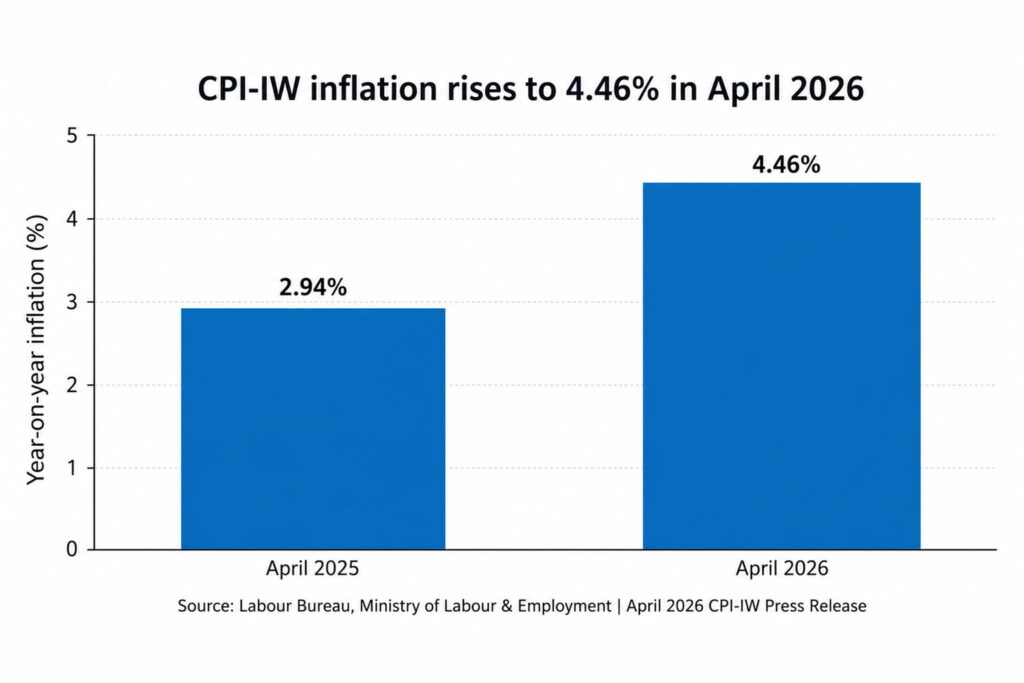
The April 2026 data gives two important signals. First, the General Index has increased from 149.1 to 149.9. Second, year-on-year inflation based on CPI-IW has risen to 4.46% in April 2026, compared with 2.94% in April 2025. This shows that inflation pressure reflected in the industrial workers’ index is higher than the same period last year.
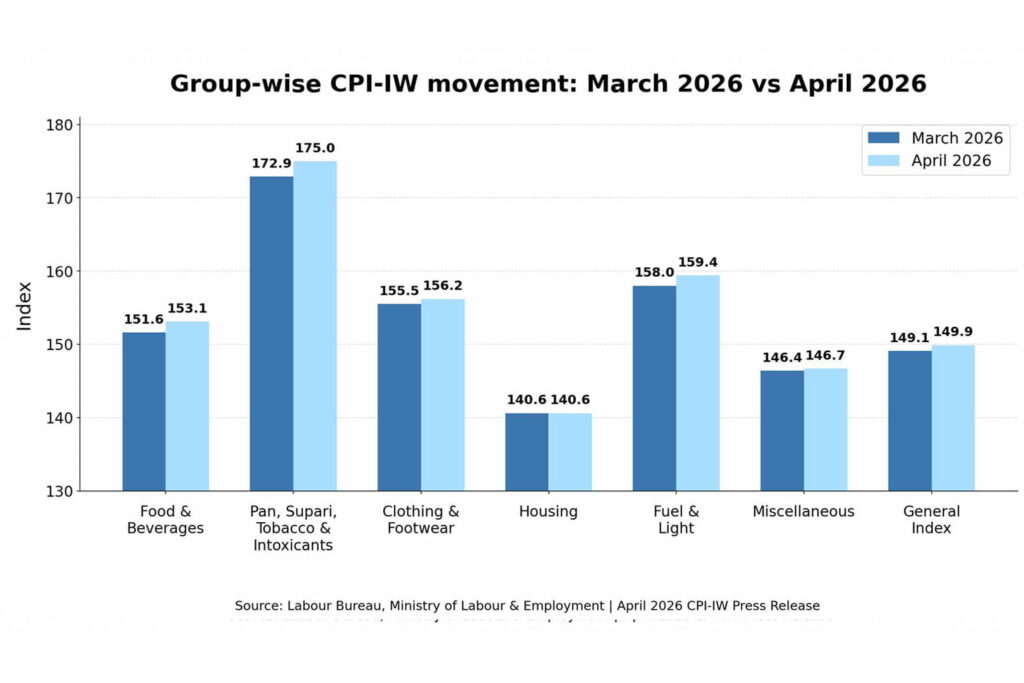
The category-wise data also gives useful insight. Food & Beverages increased from 151.6 in March to 153.1 in April. Fuel & Light rose from 158.0 to 159.4. Clothing & Footwear increased from 155.5 to 156.2. Miscellaneous moved from 146.4 to 146.7. Pan, Supari, Tobacco & Intoxicants rose from 172.9 to 175.0. Housing remained unchanged at 140.6.
These group-wise movements explain why ordinary families feel inflation differently. For some families, the pressure comes from food and daily essentials. For others, it comes from fuel, electricity, transport or regular household spending. CPI-IW brings many such price movements into one index.
This is why April’s AICPIN number is important for DA watchers. It does not confirm the final DA percentage, but it strengthens the calculation trail. Every month’s CPI-IW figure helps build the larger picture for the next DA revision.
At the same time, employees should be careful with viral DA updates. After every CPI-IW release, social media often starts circulating expected DA percentages. Some of these may be based on rough calculations, but they are not official. No DA percentage should be treated as confirmed unless it comes through the government’s formal DA/DR approval and order.
As of now, the confirmed official fact is simple: CPI-IW for April 2026 has reached 149.9. July 2026 DA has not been officially released yet.
For central government employees and pensioners, the right approach is to keep tracking the official CPI-IW releases month by month. Once the required data is complete, the expected DA picture will become clearer. But even then, the final rate will depend on official approval.
The April 2026 AICPIN release is therefore a calculation-stage update. It is useful, it is important, and it will be watched closely. But it should not be confused with a final DA announcement.
For Sainik Welfare News readers, the takeaway is clear: April CPI-IW has moved upward to 149.9, inflation pressure has increased compared with last year, and DA expectations for July 2026 will now depend on the remaining CPI-IW data.
Until the official order comes, employees and pensioners should treat every DA percentage as expected, not approved.


Leave a Reply