

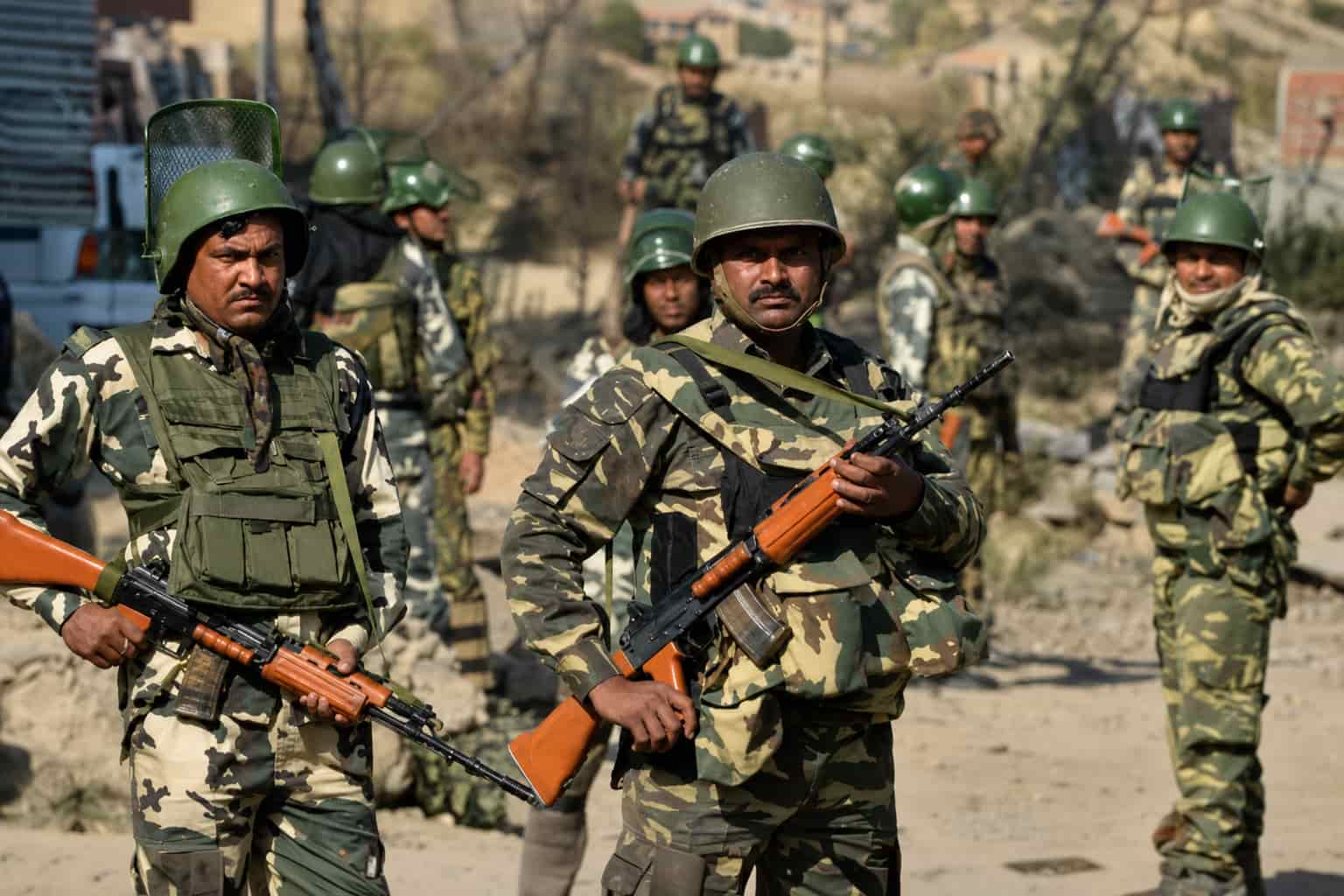
In every major crisis, people look towards the Indian armed forces with trust. Whether it is a flood, earthquake, evacuation, landslide, cyclone or national emergency, the Army, Navy and Air Force have often stepped in when the situation becomes difficult for normal administration.
This support is commonly understood as aid to civil authority.
The idea is necessary. A country must have the ability to use its strongest institutions when lives are at risk. But the same idea also needs restraint. Military support should remain available for genuine crises, not become a routine substitute for weak civilian preparation.
What is aid to civil authority?
Aid to civil authority means military support given to the civil administration during emergencies or special situations.
This support may include rescue operations, evacuation, transport, medical help, engineering assistance, communication support and disaster relief.
The armed forces have strong capability in these areas because they are trained to operate under pressure, in difficult terrain and with limited time. This is why their role becomes valuable during major disasters.
When is military support justified?
Military support is clearly justified when civilian capacity is overwhelmed.
If villages are cut off by floods, roads are broken, people are trapped, helicopters are needed, or local systems cannot respond fast enough, armed forces assistance can save lives.
In such situations, the military is not replacing civil administration. It is supporting the country during an emergency.
This is the correct use of military capability.
Where the concern begins?
The concern begins when military resources are used for tasks that civilian systems could have handled.
If an issue is predictable, routine or manageable through local administration, state disaster response forces, public works departments, civil aviation, police, transport departments or private logistics, those options should be used first.
The armed forces should not become the default answer for every administrative difficulty.
A strong country does not use the military because it is convenient. It uses the military when the situation genuinely demands military-level capacity.
Why combat readiness must be protected?
The primary role of the armed forces is national defence.
Their training, logistics, equipment, aircraft, vehicles, communication systems and manpower are built for war preparedness, border security, counter-terrorism and national security.
Every non-military deployment has a cost. Troops are diverted. Equipment is used. Flying hours are consumed. Maintenance cycles are affected. Training time may be reduced.
This does not mean the armed forces should not help citizens. They must help when the situation demands it. But the decision to use military resources should be made carefully.
Combat readiness is built every day. It should not be treated as something that can be switched on suddenly.
Why civilian systems must become stronger?
Aid to civil authority should not hide weaknesses in civil administration.
Disaster response agencies must be properly trained. State governments must maintain equipment. Local bodies must prepare emergency plans. Communication systems must have backups. Transport and relief systems must be ready before the crisis arrives.
If every serious problem is passed to the military, civilian institutions will not improve fast enough.
The better model is simple: civilian systems should handle normal and predictable duties, while the armed forces should remain available for exceptional situations.
The armed forces have earned public trust because they deliver when the country needs them. But that trust should not lead to overuse.
There is a difference between respect and dependency.
Respect means calling the military when its specialised capability is genuinely needed. Dependency means using it repeatedly because other systems are not prepared.
India needs both: strong armed forces and strong civil institutions.
The military should remain the nation’s emergency strength, not the routine solution for every administrative gap.
Why this matters to citizens?
Citizens usually see the visible side of military assistance: rescue boats, helicopters, soldiers in floodwater, relief material and quick action.
But behind every operation, there is planning, manpower, fuel, maintenance, logistics and time. These resources are part of national defence capability.
So the question is not whether the armed forces should help. They should.
The real question is whether the system is using them only when necessary.
Final takeaway
Military aid to civil authority is an essential part of India’s crisis response system.
The armed forces should be called when lives are at risk, when civilian capacity is overwhelmed and when specialised military capability is required.
But routine civil tasks should first be handled by civilian departments and disaster response agencies.
The right balance is clear: build stronger civilian systems, keep the military ready for national security, and use armed forces support only when the situation truly demands it.
That is how India can protect both public safety and military readiness.
Sources:-
Ministry of Defence Annual Report 2024-25:
https://mod.gov.in/sites/default/files/Annual-Report-of-MoD-2024-25.pdf
NDMA HADR Guidelines, October 2024:
https://ndma.gov.in/sites/default/files/PDF/Guidelines/HADR_Guideline_Oct_2024.pdf
PIB: Indian Armed Forces in Humanitarian Assistance and Disaster Relief:
https://www.pib.gov.in/PressReleasePage.aspx?PRID=2228319&lang=1®=3
PIB: Ministry of Defence Year End Review 2023, HADR operations:
https://www.pib.gov.in/PressReleaseIframePage.aspx?PRID=1989502&lang=2®=3


Leave a Reply