

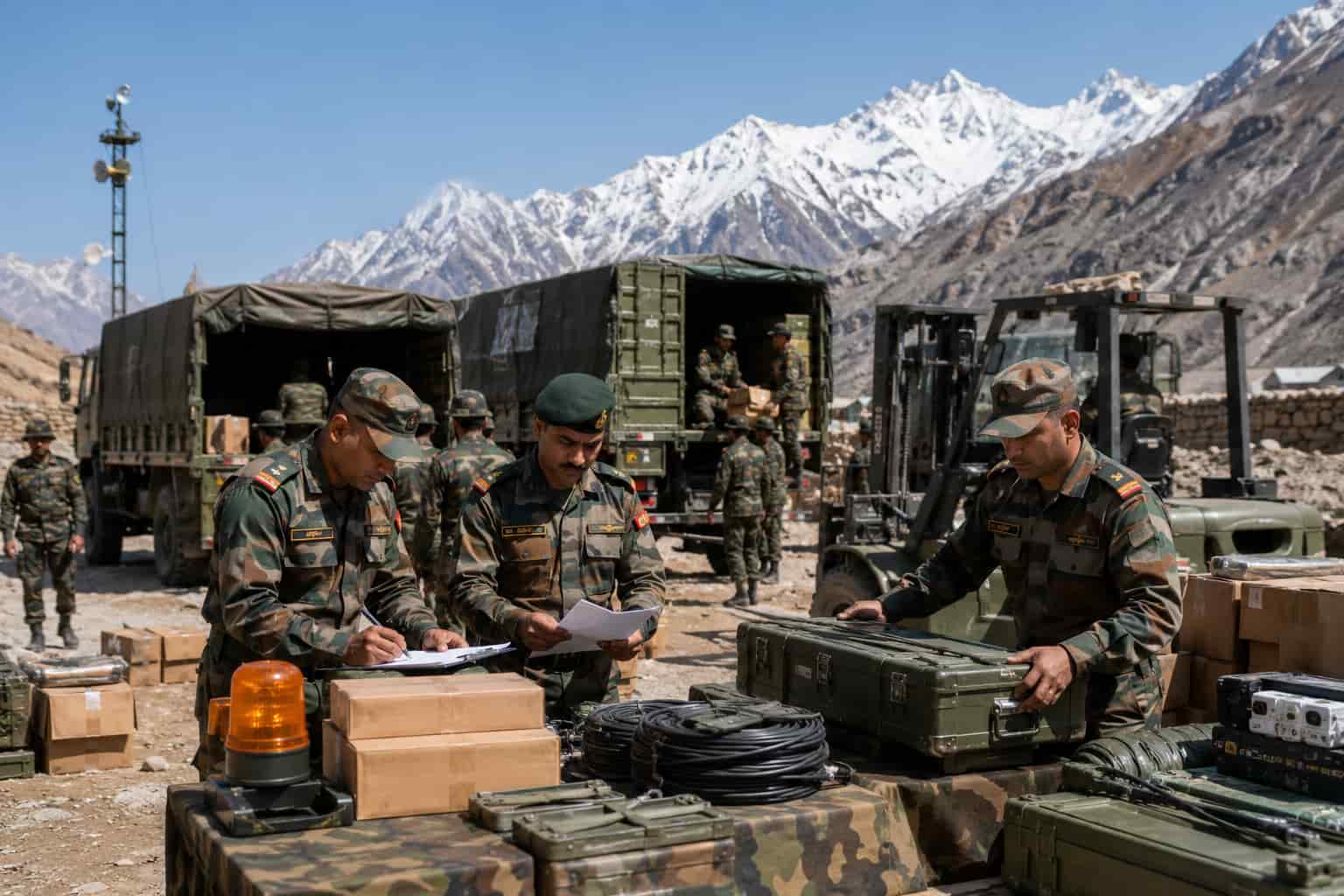
Defence preparedness is often discussed through fighter aircraft, artillery guns, missiles, drones and modern platforms.
But there is another side of military strength that rarely gets public attention: the speed of decision-making.
A formation may know exactly what it needs. A field unit may identify a repair requirement. A medical team may need urgent support. A forward area may require minor works, replacement items or technical services. But unless the approval system moves quickly, the requirement remains only a file.
This is why the revised Delegation of Financial Powers for Defence Services 2026 deserves attention.
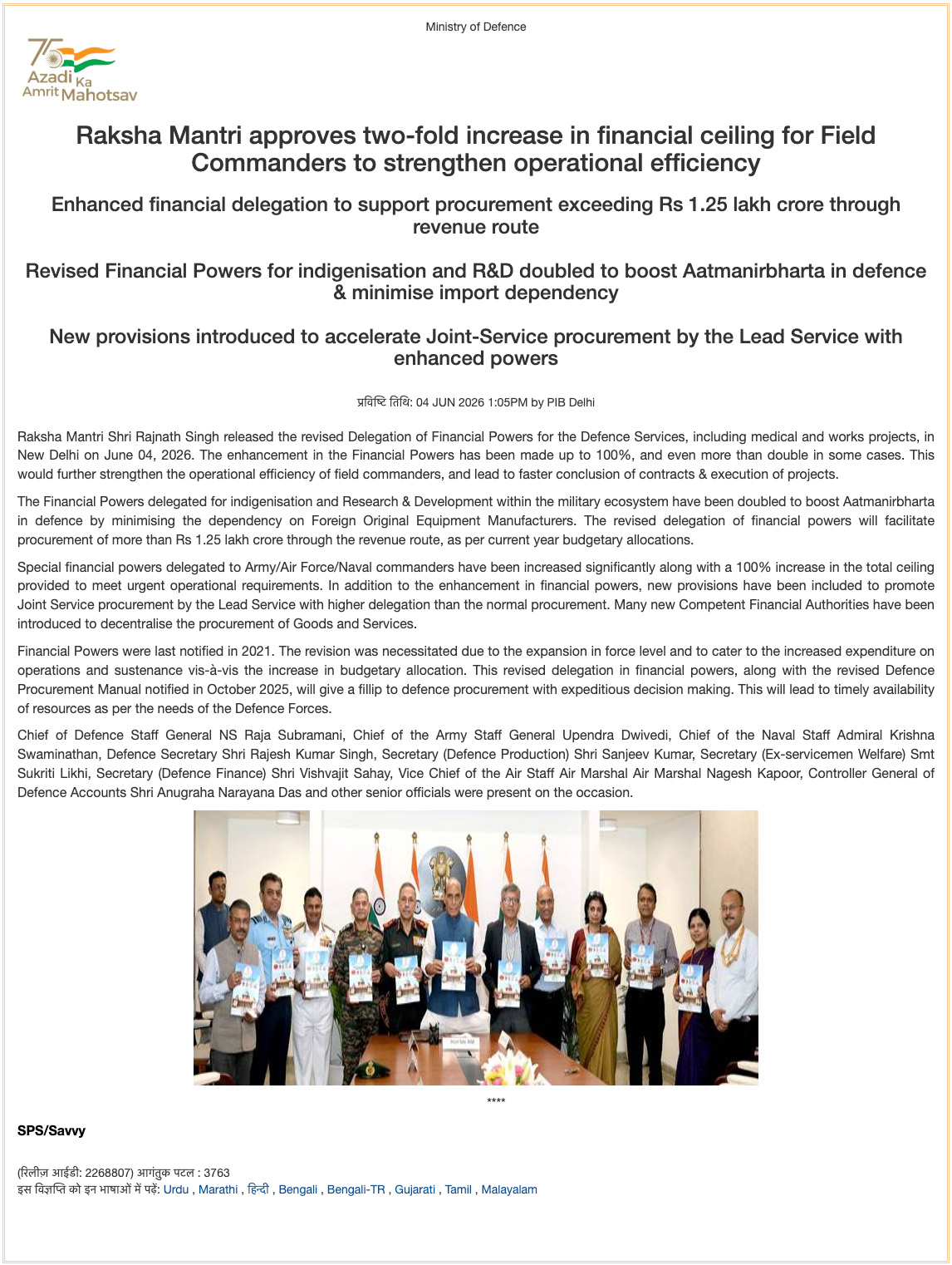
The Ministry of Defence has increased financial authority for field commanders to strengthen operational efficiency. The official release says the enhancement is up to 100 percent, and in certain cases more than double. It also says the revised framework will support procurement of more than ₹1.25 lakh crore through the revenue route.
Why this is more than a finance decision?
At first glance, this looks like an accounting or administrative update.
It is not.
In a military system, financial approval is directly connected with readiness. If procurement is slow, repairs are delayed. If repairs are delayed, availability suffers. If availability suffers, operational confidence gets affected.
This is why delegated powers matter.
A commander closer to the ground usually understands urgency better than a distant office. When that commander has a higher approved financial ceiling, smaller and time-sensitive requirements can be handled faster within the rules.
That does not mean uncontrolled spending. It means faster action under authorised limits.
What does revenue procurement actually support?
Many people understand defence purchases only through large capital acquisitions. But daily military functioning depends heavily on revenue procurement.
Revenue procurement supports operations and sustenance. It can include maintenance, spares, repair services, consumables, operational support items, infrastructure-related requirements and other recurring needs.
A modern force cannot remain effective if these supporting systems move slowly.
The Defence Procurement Manual 2025 was also released to simplify and streamline revenue procurement. PIB states that the manual is effective from 1 November 2025 and is meant to facilitate revenue procurement of approximately ₹1 lakh crore.
The 2026 financial delegation update fits into this larger reform direction.
Why last-mile readiness matters?
Military readiness is finally tested at the last mile.
A vehicle must start when needed. A communication system must work when the unit moves. A medical facility must respond when casualties arrive. A field repair must not wait endlessly for approvals. A small but urgent works project should not remain stuck when it directly affects functioning.
This is where higher financial powers may help.
The value of a reform is not only in the order itself. Its value is visible when a unit gets timely support, when a project moves faster, or when a local requirement is solved before it becomes a bigger problem.
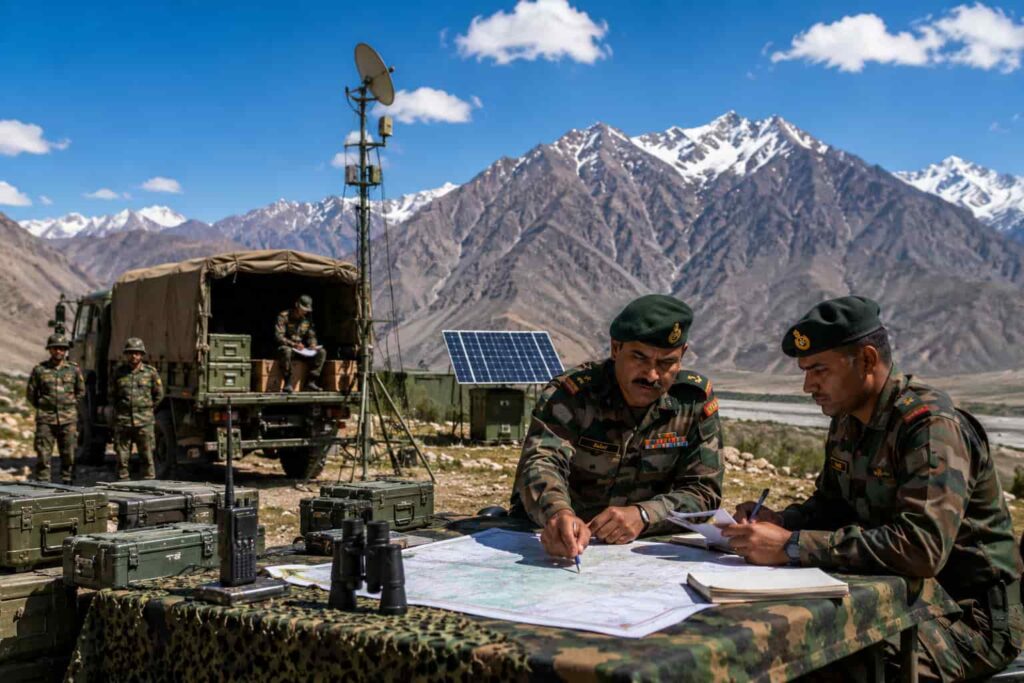
Medical and works projects are part of readiness
The official release mentions that the revised financial delegation also covers medical and works projects.
This is important.
Military effectiveness is not built only on combat systems. It also depends on hospitals, field medical resources, accommodation, roads, storage, workshops, repair spaces and other infrastructure.
A unit cannot perform at full strength if its support system is weak.
By including medical and works-related powers, the reform recognises that readiness is an ecosystem. Weapons matter, but so do facilities, repair chains, medical care and infrastructure.
Why indigenisation gets a boost?
The official release also says financial powers for indigenisation and Research and Development inside the military ecosystem have been doubled.
This is a major point for India’s defence future.
Modern warfare is changing quickly. Forces now need drones, counter-drone systems, electronic warfare tools, surveillance equipment, communication upgrades, rugged field technologies and fast adaptation to new threats.
If the financial approval system supports indigenous trials and service-level innovation, Indian solutions can move closer to field needs.
Aatmanirbhar Bharat in defence will not succeed only through big factories. It also needs faster feedback from users, quicker testing, and financial flexibility for practical field solutions.
Why joint-service procurement matters?
The revised framework introduces new provisions for Joint-Service procurement by the Lead Service.
This can be important where the Army, Navy and Air Force have common requirements.
Instead of three parallel processes, one Lead Service may handle procurement for a shared need under enhanced authority. This can reduce duplication, improve standardisation and support jointness.
Future conflicts will not remain limited to one domain. Land, air, sea, cyber, space, intelligence and communications are increasingly connected. Procurement systems must also become more coordinated.
Joint-service purchasing is one step in that direction.
What should not be misunderstood?
This reform does not mean every defence purchase will become instant.
It does not remove procedures, budget discipline, audit responsibility or procurement rules.
The change gives higher authority within a formal framework. The real results will depend on how clearly the rules are applied, how fast documentation moves, how responsibly commanders use powers, and how effectively vendors and agencies respond.
Speed must work with accountability.
That balance is essential.
Comment
The real strength of this reform is decentralisation with responsibility.
A modern military cannot wait for every practical requirement to move through a long approval ladder. At the same time, public money must be used carefully.
The revised financial powers attempt to bring both needs together: quicker local decisions and continued procedural control.
For citizens, this is a reminder that military readiness is not only about dramatic weapon launches. It is also about finance, logistics, maintenance, approvals, contracts and execution.
A soldier may never read the financial delegation order. But he feels its impact when the required support reaches the ground on time.
Final takeaway
The Defence Financial Powers 2026 update should be viewed as a readiness reform.
It increases authority for field commanders, supports revenue-route procurement worth more than ₹1.25 lakh crore, strengthens indigenisation and R&D, includes medical and works projects, and promotes Joint-Service procurement.
Its importance lies in one simple idea: military requirements should not remain delayed only because decision-making power is too far from the field.
If implemented with discipline, the revised framework can improve the speed at which the Armed Forces receive practical support.
That is why higher financial powers for commanders matter.
Sources:-
PIB official release:
Raksha Mantri approves two-fold increase in financial ceiling for Field Commanders to strengthen operational efficiency
https://www.pib.gov.in/PressReleasePage.aspx?PRID=2268807
PIB release on Defence Procurement Manual 2025:
https://www.pib.gov.in/PressReleasePage.aspx?PRID=2181894
PIB Year of Reforms 2025 background:
https://www.pib.gov.in/PressReleasePage.aspx?PRID=2210549&lang=2®=3





Leave a Reply