

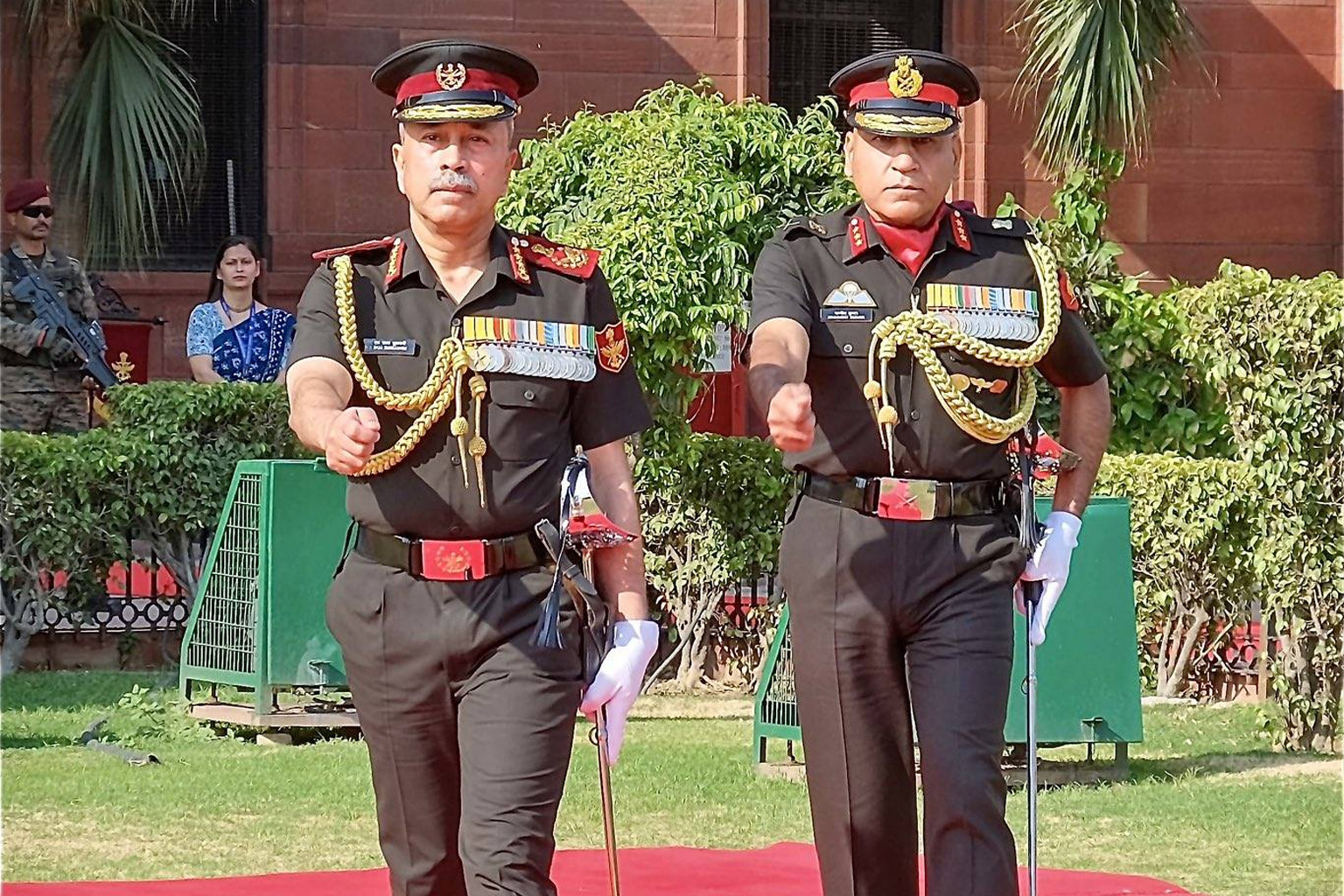
General NS Raja Subramani has taken charge as India’s Chief of Defence Staff and Secretary, Department of Military Affairs. Here is why his appointment matters for jointness, theatre commands, defence modernisation and India’s armed forces.
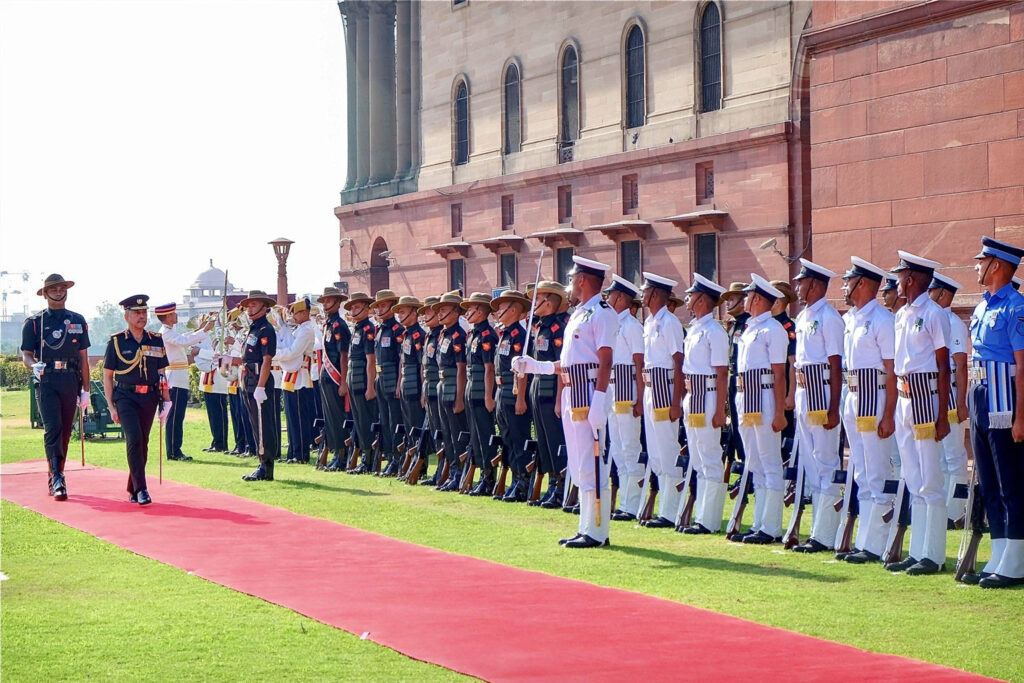
A change at the top of India’s military leadership is never just a ceremonial moment.
The Guard of Honour may last a few minutes. The official photograph may be released the same day. The appointment order may look formal. But behind that moment sits a much larger question: how will India prepare its armed forces for the next kind of war?
That question has returned to focus after General NS Raja Subramani assumed charge as India’s Chief of Defence Staff and Secretary, Department of Military Affairs.
He succeeds General Anil Chauhan, who completed his tenure after leading the CDS office through an important period of military integration, reform and strategic continuity. The Government had earlier appointed Lieutenant General NS Raja Subramani as the next CDS, and he has now formally taken over the post.
For the general public, this may appear to be another senior military appointment.
For soldiers, veterans, defence aspirants, policy watchers and military families, it is much more.
The Chief of Defence Staff is one of the most important positions in India’s national security structure. The CDS does not command only one service. The role is linked to the larger effort of making the Army, Navy and Air Force work with greater coordination, sharper planning and a more integrated approach.
That is why General Subramani’s appointment matters.
Why the Chief of Defence Staff role is so important?
Modern war is no longer fought in neat compartments.
A crisis on the border may need air support, satellite intelligence, drones, artillery, logistics, cyber defence and naval awareness at the same time. A maritime threat can affect trade, energy routes and land security. A cyberattack can begin before any visible military movement. A drone swarm can change the tempo of a battlefield within minutes.
This is why India created the CDS post.
The main idea behind the post is to strengthen jointness among the three services and improve integrated military planning. In simple language, the CDS is expected to help the Army, Navy and Air Force think together, plan together and prepare together.
This is easier to say than to implement.
Each service has its own history, culture, operational logic and command system. The Army is deeply focused on land borders and ground combat. The Navy thinks in terms of oceans, sea lanes and maritime reach. The Air Force focuses on air dominance, speed, range and strategic strike capability.
The CDS has to respect these strengths while building a larger joint military approach.
That is the real challenge.
Why General Subramani’s appointment comes at a critical time?
General NS Raja Subramani takes charge at a time when India’s defence reforms are moving through an important phase.
The armed forces are looking at theatre commands, tri-service integration, indigenous defence manufacturing, new-age warfare, drones, artificial intelligence, cyber capability, space-based systems and faster operational decision-making.
These are not small changes.
They can influence how India fights, trains, equips and mobilises in the coming decades.
The new CDS will have to deal with many priorities at once. He will have to maintain operational readiness while pushing reform. He will have to support modernisation while managing budget realities. He will have to encourage Atmanirbharta while ensuring that soldiers get reliable and battle-ready equipment. He will have to bring services closer without weakening their individual strengths.
This is why the timing of this appointment is important.
India’s security environment is complex. The challenges are not only on one border or in one domain. They stretch from land borders to the Indian Ocean, from air defence to cyber threats, from drones to missiles, from information warfare to supply chain security.
A strong CDS office becomes important in such an environment.
The big reform challenge: Jointness in real terms
Jointness is a word often used in defence discussions, but its real meaning is practical.
It means the Army should not plan in isolation from the Air Force.
It means the Navy’s maritime awareness should support national security planning beyond the sea.
It means intelligence, logistics, communication and operational planning should not remain trapped in separate service silos.
It means training exercises must prepare forces for combined operations, not just service-specific performance.
It means future commanders must be comfortable working with officers from other services.
For India, this is a long journey.
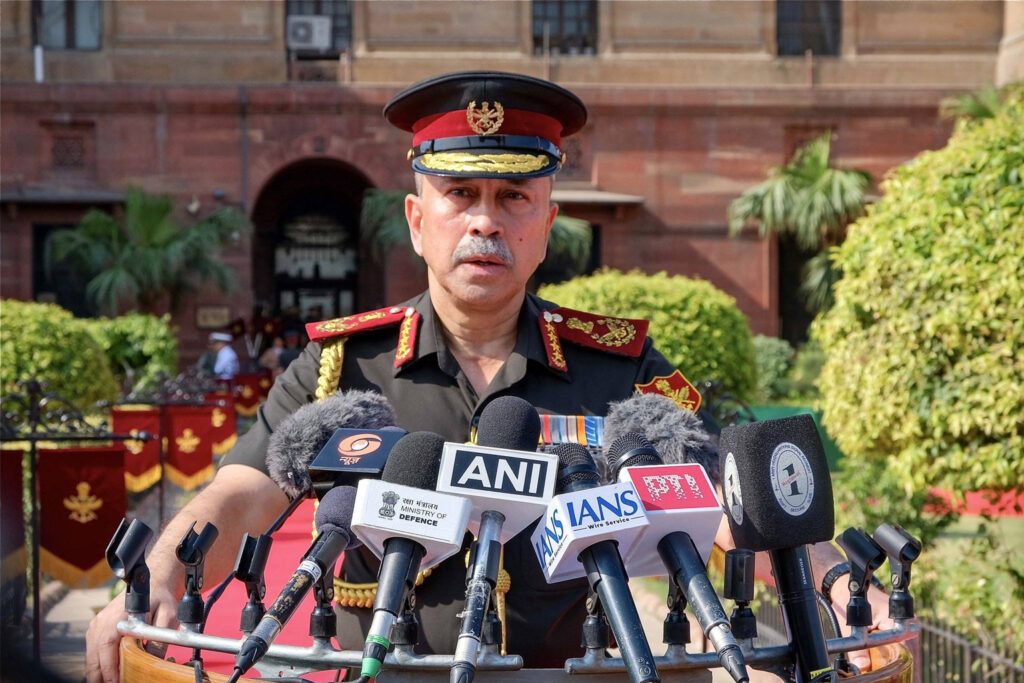
The CDS is expected to push this process forward. General Subramani’s first message after taking charge placed emphasis on jointness, Atmanirbharta and innovation. These three themes are now central to India’s defence transformation.
The real test will be implementation.
It is one thing to speak about tri-service synergy. It is another thing to change structures, habits, planning systems and command relationships that have existed for decades.
Theatre commands will remain the most watched issue
One of the biggest issues before India’s military leadership is theatreisation.
Theatre commands are meant to bring different service assets under integrated operational structures based on geography or threat. The idea is to create better coordination, reduce duplication and improve combat response.
For example, if a future theatre command has responsibility for a particular region, it may bring land, air and other operational resources into a more unified planning structure.
But theatre commands are also sensitive.
The Army, Navy and Air Force have legitimate operational concerns. Air assets are limited and need flexibility. Land borders require constant readiness. Maritime responsibilities are expanding. Each service wants to ensure that integration does not reduce its effectiveness.
This is why the CDS has to move carefully.
Theatreisation cannot become only a file exercise. It has to improve real combat capability. It must help commanders respond faster. It must make logistics better. It must reduce duplication where possible. It must strengthen India’s preparedness without creating confusion in command responsibility.
For General Subramani, this may be one of the biggest tests.
Atmanirbharta and innovation: More than slogans
India has been pushing defence self-reliance for several years. But Atmanirbharta in defence is not only about replacing foreign equipment with Indian equipment.
It is about building a reliable national defence ecosystem.
This includes public sector units, private industry, startups, research institutions, universities, engineers, scientists and serving military professionals who understand operational requirements.
The armed forces need drones, counter-drone systems, secure communication, electronic warfare tools, surveillance platforms, advanced ammunition, missiles, cyber systems, battlefield management tools and modern logistics support.
Innovation must reach the unit level.
A technology is useful only when it works in difficult terrain, under pressure, with limited time and in real operational conditions.
That is why the CDS role becomes important. The CDS can help align the requirements of the three services with the capability of Indian industry and research institutions.
General Subramani’s emphasis on innovation signals that future warfare will require faster adaptation, not only traditional procurement.
What this means for soldiers on the ground?
For a soldier posted at a forward location, words like theatreisation, integration and modernisation may sound distant.
But the effect of these reforms is ultimately felt at the ground level.
A better integrated military system can mean faster intelligence flow.
It can mean better coordination between ground forces and air assets.
It can mean improved logistics in difficult areas.
It can mean stronger communication networks.
It can mean faster induction of useful indigenous equipment.
It can mean better training for joint operations.
It can mean fewer delays when different services have to work together.
That is why defence reforms should not be seen only as high-level structural changes. Their final purpose must be to strengthen the person in uniform.
A reform is meaningful only if it improves combat readiness and supports the soldier, sailor and air warrior.
Why veterans and Veer Naris are part of this conversation?
For the defence community, leadership appointments also carry emotional meaning.
Veterans watch these developments closely because they understand how decisions at the top eventually affect the services. Families watch because military life is not limited to the serving individual. Veer Naris and family pensioners know that the nation’s defence system also has a human side.
Reports around General Subramani’s assumption of charge also referred to welfare of veterans and Veer Naris as part of the larger military family focus. This point is important, but it should be understood correctly.
This appointment is not an OROP notification.
It is not a pension revision order.
It is not an ECHS reform announcement.
It is not a new ex-servicemen welfare scheme.
But the mention of veterans and Veer Naris shows that military welfare remains part of the broader defence conversation.
This distinction is important. Leadership news should be respected as leadership news. Welfare policy updates should be reported only when official orders are issued.
What defence aspirants should learn from this appointment?
Defence aspirants preparing for NDA, CDS, AFCAT, SSB or other officer entries should study this appointment carefully.
Many aspirants know ranks, uniforms and motivational stories. But a future officer must also understand how India’s military structure is changing.
Tomorrow’s officers will not fight yesterday’s war.
They will operate in an environment shaped by drones, cyber warfare, artificial intelligence, electronic warfare, long-range precision weapons, space-based surveillance and joint operations.
They will have to think beyond one service.
They will have to understand inter-service coordination.
They will have to respect technology without losing leadership qualities.
They will have to lead people while using modern systems.
The appointment of a new CDS is an opportunity for aspirants to understand the direction of India’s armed forces.
What citizens should understand?
For citizens, the CDS appointment should not be seen only through the lens of personality.
The bigger issue is institutional reform.
India needs armed forces that can respond quickly, coordinate effectively and adapt to new threats. This requires leadership, doctrine, technology, training, logistics, procurement and joint planning.
The CDS is central to that effort.
General NS Raja Subramani’s tenure will be watched for progress on tri-service integration, theatre commands, defence modernisation, indigenous capability and operational preparedness.
These are complex subjects, but they affect national security directly.
A strong military is not built only through bravery. Bravery is essential, but it must be supported by planning, equipment, training, coordination and clear command systems.
What should not be misunderstood?
This appointment should not be confused with direct welfare announcements.
It does not mean salary revision.
It does not mean pension revision.
It does not mean OROP update.
It does not mean new recruitment rules.
It does not mean an immediate change in ECHS or CSD benefits.
It is a defence leadership development with long-term implications for military reform, jointness, modernisation and national security.
For readers, this distinction matters because defence news often gets mixed with welfare expectations. Both are important, but both are not the same.
The road ahead
The road before the new CDS will not be simple.
Theatre commands require consensus.
Modernisation requires funds and clarity.
Atmanirbharta requires quality and speed.
Innovation requires risk-taking and testing.
Jointness requires trust among services.
Welfare requires continued institutional sensitivity.
Operational readiness requires focus every single day.
General NS Raja Subramani will have to move across all these areas while maintaining continuity from the previous leadership.
The appointment is therefore not just about who has taken charge.
It is about what India expects from the CDS office in the next phase.
Final takeaway
General NS Raja Subramani taking charge as Chief of Defence Staff is a major development in India’s defence leadership.
It comes at a time when the country is preparing its armed forces for a more integrated, technology-driven and unpredictable security environment.
The big issues ahead are clear: jointness, theatre commands, Atmanirbharta, innovation, operational readiness, tri-service synergy and military welfare.
For soldiers, the outcome should be better preparedness.
For veterans and military families, the welfare focus should remain part of the larger conversation, but only official orders should be treated as policy change.
For defence aspirants, this is a chance to understand the future of military leadership.
For citizens, it is a reminder that national security is not built in one day. It is built through leadership, reform, discipline and readiness.
The ceremony may be over.
The real work begins now.


Leave a Reply