


The 8th Pay Commission debate is now moving beyond one basic question of when the new recommendations will come. A more important question is beginning to dominate the conversation: when the revision finally happens, how much difference will it actually make in monthly salary and pension? That is where the fitment factor becomes the most important number in the entire discussion. The Government of India formally constituted the 8th Central Pay Commission on 3 November 2025, and the official process is currently focused on collecting memorandums and stakeholder inputs rather than announcing final pay outcomes.
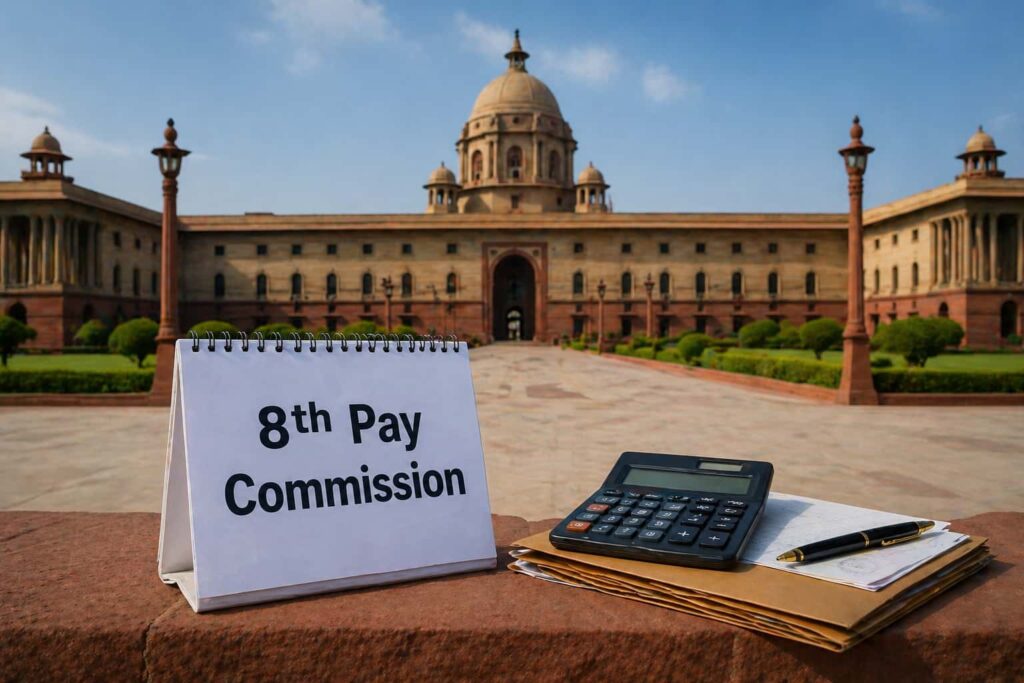
For many employees, the fitment factor sounds like a technical phrase used only in pay tables and calculations. In reality, it has a direct connection with daily life. It is the multiplier that helps determine how the existing basic pay is converted into a revised structure. Because basic pay influences several other components over time, this figure does not stay limited to one column of a salary sheet. It shapes the overall size of the revision and the way people judge whether the 8th CPC delivered real relief or only a limited correction. This is exactly why the fitment factor has become the centre of public interest even before any formal recommendation has been issued.
The reason this debate has become so intense is simple. Expectations have been rising, but the official process is still open. The Commission invited submissions through its online portal and said memorandums would be accepted up to 30 April 2026. The official website also listed Delhi interaction notices dated 11 April 2026, Pune meetings for 4 and 5 May 2026, and further information on forthcoming meetings. That means employee organisations, unions and other groups are still trying to influence the final direction of the recommendations. In such a phase, speculation naturally increases because people want to estimate what the final package may look like.
This is also why different fitment numbers keep appearing in the public space. Some employee-side voices and media discussions have floated stronger upward expectations, while former Finance Secretary Subhash Chandra Garg has publicly argued for a much more restrained range. In one widely cited explanation, he said the actual fitment factor could be around 1.92 to 2.08 based on his assessment of the calculation framework. Whether or not that exact range proves correct, his view has shaped the debate because it highlights the gap between popular hopes and what fiscal caution may allow.

That gap matters because even a small difference in the multiplier can change the public mood around the 8th CPC. A higher factor creates the impression of a strong correction and produces a more visible jump in revised basic pay. A lower or moderate factor can still increase salaries and pensions, but the result may feel less transformative, especially after months of discussion and expectation-building. This is why the fitment factor is not merely an accounting tool. It has become the emotional and political centre of the pay commission debate, because it will decide whether people see the final outcome as generous, balanced or disappointing.
Pensioners are equally tied to this outcome. The discussion is often presented as a serving employees’ issue, but pension revision is closely linked to how the new pay structure is shaped. For retired families, a stronger revision can improve monthly comfort and provide support against rising household and medical costs. A moderate revision still brings relief, but the sense of adequacy depends on how far it closes the gap between present expenses and existing pension levels. That is why pensioners are watching the fitment debate just as closely as serving staff.
At the same time, the government’s side of the equation cannot be ignored. Any upward move in fitment affects not just current salaries but also future pension liabilities and broader expenditure commitments. That is one reason pay commission outcomes often involve a balance between employee expectations and financial sustainability. The official record so far shows that the 8th CPC is still examining inputs under its terms of reference, not announcing any final multiplier. So, for now, every projected figure should be treated as an estimate, a demand or an opinion, not as a confirmed decision.
The bigger takeaway is this: the 8th Pay Commission will eventually be judged not by the volume of discussion around it, but by the quality of financial change it produces. And that judgment will depend heavily on the fitment factor. In the coming months, employees and pensioners may hear many suggested numbers, but the real story is not which figure trends first. The real story is which figure finally gets accepted, and how that one number reshapes pay and pension reality for millions of families.



Leave a Reply