


When people talk about the 8th Pay Commission, most conversations still revolve around expected salary hikes, fitment factor, pension revision, and allowance changes. These subjects naturally attract attention because they directly affect household finances, retirement planning, and long-term security. But there is another reality that deserves far more attention right now.

Before recommendations are announced, before calculations are debated, and before new pay structures are discussed, there is one stage that quietly determines what the Commission may actually examine. That stage is the submission phase.
This is the moment when employees, pensioners, associations, veterans and other stakeholders are expected to place their concerns before the Commission in a formal and structured way. For many people, this may appear to be only a procedural step. In reality, it is much more than that. It is the point where demands move from private discussion to official consideration.
That is why the current deadline is so important.
A large number of employees and pensioners are still discussing their concerns in WhatsApp groups, social media comments, local meetings, and association circles. These discussions are useful for awareness, but awareness alone does not guarantee representation. A concern becomes meaningful in the 8th Pay Commission process only when it is properly written, submitted through the official route, and recorded in a way the Commission can study.
This is where many people make a serious mistake.
They assume that if an issue is already widely known, it will automatically be considered. But a pay commission does not work only on assumptions or public mood. It works on structured inputs, documented demands, category-wise concerns, and officially received representations. If a point is not properly submitted, there is always a risk that it may remain outside the main discussion, no matter how genuine or widespread the concern may be.
That is why the deadline is not just a date on a calendar. It is the closing point of an opportunity.
For central government employees, this stage matters because it allows them to raise specific issues that affect their current and future financial condition. These may include minimum pay, fitment factor, pay matrix revision, increment rate, promotion-related stagnation, MACP, HRA, TA, LTC, medical facilities, and many other service-linked matters. For pensioners, the focus may be different. They may want to highlight concerns such as pension revision, Dearness Relief, family pension, gratuity, commutation recovery, medical access, or documentation-related hardship. Defence veterans and ex-servicemen may want to separately raise matters connected with rank parity, MSP, OROP anomalies, disability pension, field-related hardship, ECHS, CGHS, and long-pending service-related issues.
Each of these concerns deserves clear treatment.
The problem is that many genuine demands lose impact because they are presented poorly. A long emotional complaint may express frustration, but it does not always help the Commission understand the exact issue. On the other hand, a brief and well-drafted representation can be far more effective.
A strong submission usually follows a simple logic.
First, it identifies the issue clearly. Second, it explains who is affected. Third, it shows what the current problem is. Fourth, it states what correction or recommendation is being requested. Finally, it explains why the request is justified.
This approach makes the demand easier to understand and easier to evaluate.
For example, saying “pensioners are facing problems” is too broad. But stating that a particular category of pensioners is facing a specific anomaly due to a rule interpretation, and then explaining the financial effect of that anomaly, creates a much stronger case. The same principle applies to salary revision, MACP, allowances, pay parity, and retirement benefits. Clarity creates impact.
Another reason this stage matters so much is proof.
Once a memorandum is submitted through the official system, the acknowledgment, confirmation message, or Memo ID becomes important. It shows that the representation has entered the process. That proof matters not only for personal satisfaction, but also because it provides a record that the issue was formally placed before the Commission. In a process involving lakhs of employees and pensioners, proof of submission is not a small detail. It is part of responsible participation.
This is especially important because not everyone will get a physical opportunity to present their concerns directly. Interaction meetings may happen in selected places and with limited participation. Associations may get a chance to speak. Some organisations may be able to represent larger groups. But millions of employees and pensioners cannot depend only on the possibility of a direct meeting. For them, the online memorandum route is the most practical and accessible channel.
That is why waiting until the last moment is risky.
As deadlines approach, confusion increases. People start rushing, asking what to write, whom to contact, and how to submit. Technical issues, hesitation, and poor drafting can all reduce the quality of a submission. A demand that is prepared carefully and submitted on time always stands on firmer ground than one filed in panic at the end.
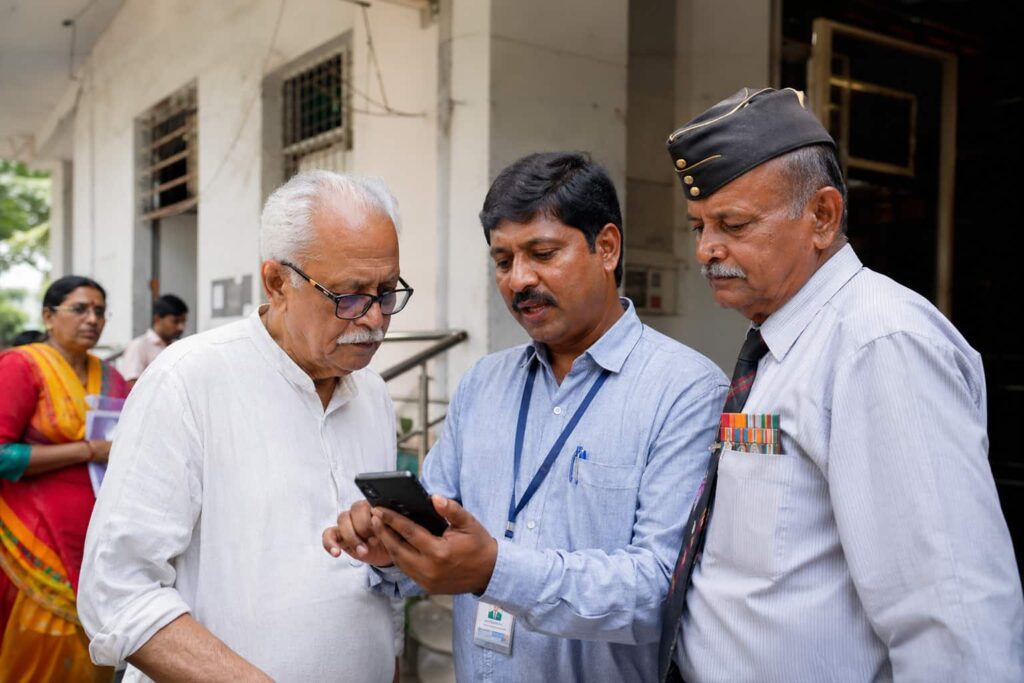
This urgency becomes even more important when we think about elderly pensioners, veer naris, and veterans living in smaller towns or remote areas. Many of them may have valid and serious concerns, but they may not be comfortable with online systems. They may not know how to draft a memorandum, upload supporting material, or save the proof of submission. This is where families, welfare groups, local associations, and younger members of the community have an important role to play. Helping senior citizens submit their demands is not just a technical task. It is a way of ensuring that their voice does not get left behind simply because the system has moved online.
There is also a larger lesson hidden in this entire process.
The final recommendations of a pay commission do not appear suddenly. They are built gradually through data, inputs, comparisons, analysis, and recorded demands. By the time the final report is announced, much of the groundwork has already been done. In simple words, the final outcome is shaped much earlier than most people realise.
That is why the present stage deserves serious attention.
For many families, the 8th Pay Commission is not just a matter of revised salary tables. It is tied to future expenses, children’s education, household budgeting, health costs, retirement dignity, and financial confidence. For pensioners, it can influence the quality of daily life. For serving employees, it can affect morale and long-term planning. For defence personnel and veterans, it also carries an emotional dimension of fairness, recognition, and correction of old anomalies.
Seen from that angle, the memorandum deadline becomes far more than an administrative formality. It becomes a participation deadline. It becomes a representation deadline. Most importantly, it becomes a chance to ensure that your concern is not lost before the real decision-making even begins.
The message for employees, pensioners, and ex-servicemen is therefore very clear. Do not depend only on discussions, rumours, forwarded messages, or assumptions. If an issue matters to you, put it on record. Write it clearly. Submit it properly. Save the confirmation. And if you can, help someone else do the same.
Because when the 8th Pay Commission starts weighing its final recommendations, the issues that stand the strongest chance of being heard will not be the ones discussed the loudest outside the system. They will be the ones submitted properly inside it.


Leave a Reply