


When the 8th Pay Commission was finally constituted, many employees and pensioners expected the discussion to move quickly toward fitment factor, minimum pay, arrears and revised pension. Instead, a different debate has taken over. The focus has shifted to the Terms of Reference, because that document decides what the Commission is formally expected to examine and how clearly major concerns are framed from the very beginning. The Government of India constituted the 8th CPC on 3 November 2025, and the official website shows that the Commission is now active, with updates on memorandum submission, Delhi interactions and the Pune visit.
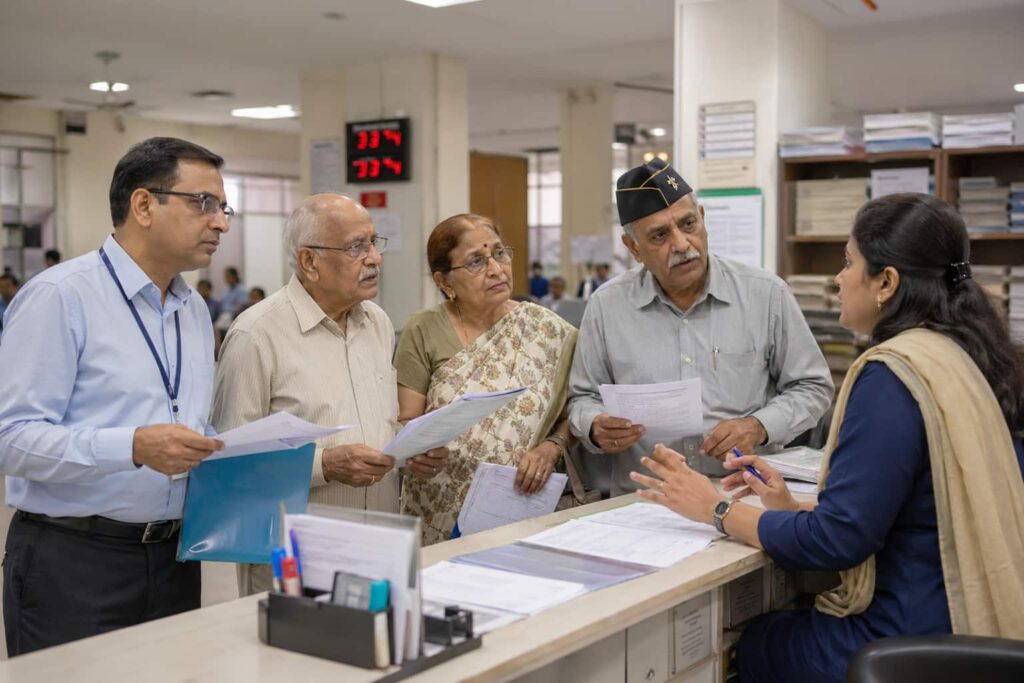
This is why the present debate is more serious than it may first appear. A Terms of Reference document is not just a legal formality. It sets the working boundary of the Commission. It shapes which issues are examined in detail, which issues are grouped together, and which issues may later become subjects of interpretation rather than certainty. In policy terms, that is the difference between entering the process with confidence and entering it with unanswered questions.
The anxiety has grown because many employees and pensioners are comparing the 8th CPC language with earlier commissions. The 7th Central Pay Commission’s official reference text explicitly spoke about revision of pension for employees who had retired prior to the date of effect of the recommendations, and it also explicitly said the Commission should recommend the date of effect of its recommendations. The official 6th CPC reference text likewise explicitly included the phrase “the date of effect thereof” in its mandate. By contrast, the 8th CPC resolution speaks of reviewing gratuity and pensions of employees not borne on the National Pension System and making recommendations thereon, but it does not repeat the earlier explicit wording on the date of effect, and that is exactly why concerns have surfaced.
That difference is important because it changes the psychological starting point of the process. Employees are no longer asking only, “How much will salary rise?” Pensioners are no longer asking only, “Will pension be revised?” They are first asking whether the written scope gives enough assurance on timing and coverage. This is not merely a technical objection. A clear date of effect matters because it influences arrears, revised basic pay, revised pension calculations and planning decisions for both serving employees and retirees. When that certainty is not written in the same direct way as before, suspicion naturally grows.
For pensioners, the issue is even more sensitive. The 8th CPC resolution certainly includes pension and gratuity within its mandate, so the concern is not that pensions are absent from the document. The concern is that many retirees want the same level of explicit reassurance that earlier texts appeared to provide, especially for people who retired before the eventual implementation date. In a country where pension supports daily living, medical care and family security after retirement, ambiguity in wording can create anxiety long before any recommendation is written.
The debate has also been sharpened by another part of the 8th CPC mandate. The resolution tells the Commission to make recommendations while keeping in view the country’s economic conditions, fiscal prudence, the need to preserve developmental and welfare resources, the likely impact on State finances, and the unfunded cost of non-contributory pension schemes. From a government perspective, these are standard policy guardrails. From an employee or pensioner perspective, however, they can feel like warning signs that financial caution may dominate the conversation unless stakeholder concerns are framed strongly and early.
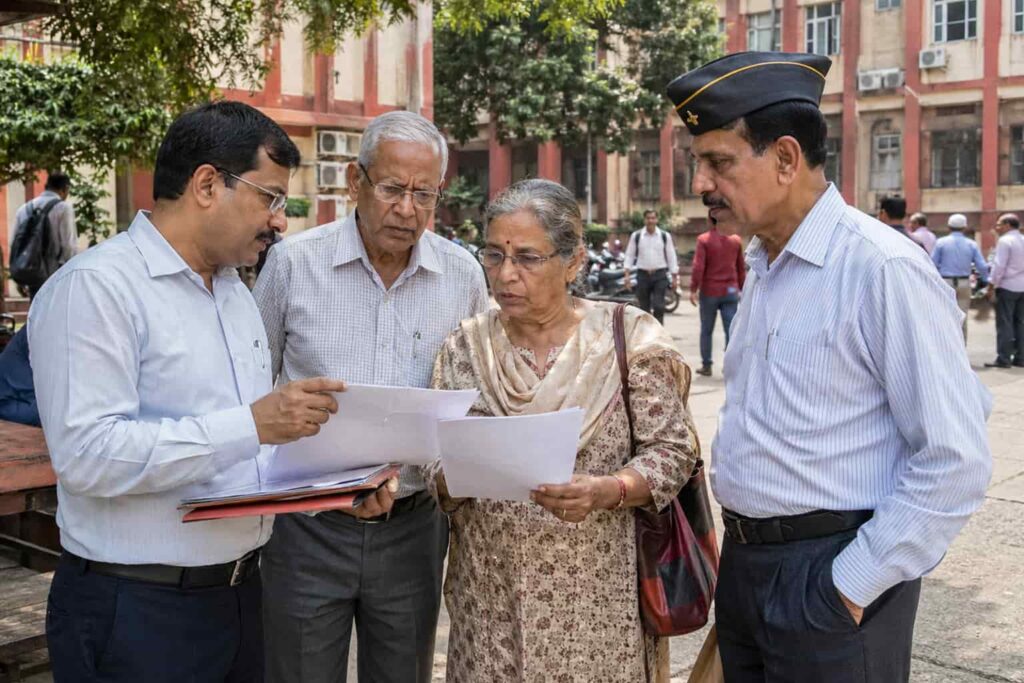
That is why this phase matters so much. The official 8th CPC website shows that the Commission is already in a live working cycle, not a symbolic formation stage. It has issued notices regarding Delhi interactions on 28 and 29 April 2026 and the Pune visit on 4 and 5 May 2026. It has also opened a structured memorandum system and clearly stated that submissions must be made only through the specified online route, with paper memoranda, hard copies, PDFs and email submissions not being entertained. In other words, this is the stage where clarity in the mandate and clarity in stakeholder submissions meet each other.
This gives the present debate a practical meaning. If employee groups, pensioner bodies, veterans’ organisations and individual stakeholders believe that the ToR needs clearer interpretation or stronger emphasis on specific issues, the time to raise those concerns is now, not after the report is drafted. Once a pay commission moves deeper into classification, consultation and report writing, the chance to reshape the foundation becomes narrower. That is why unions and associations are paying attention to wording today, even before the country sees a single final pay figure.
Seen this way, the current ToR debate is not really about one missing phrase alone. It is about trust in process. Employees want confidence that the eventual implementation path will not drift into uncertainty. Pensioners want confidence that their coverage will be treated with enough clarity and seriousness. Veterans and defence pensioners want confidence that service-linked realities will not be lost inside broad administrative categories. And the Commission itself needs a process where issues are presented clearly enough to be examined on record.
So the real lesson is simple. The 8th Pay Commission story is no longer only about expectations later. It is about clarity now. A strong final report begins with a clear mandate, clear submissions and clear trust among the people who will live with the outcome. That is why the debate around the Terms of Reference matters so much at this stage. It is not delaying the salary conversation. It is deciding how credible that conversation will be when the recommendations finally arrive.



Leave a Reply