


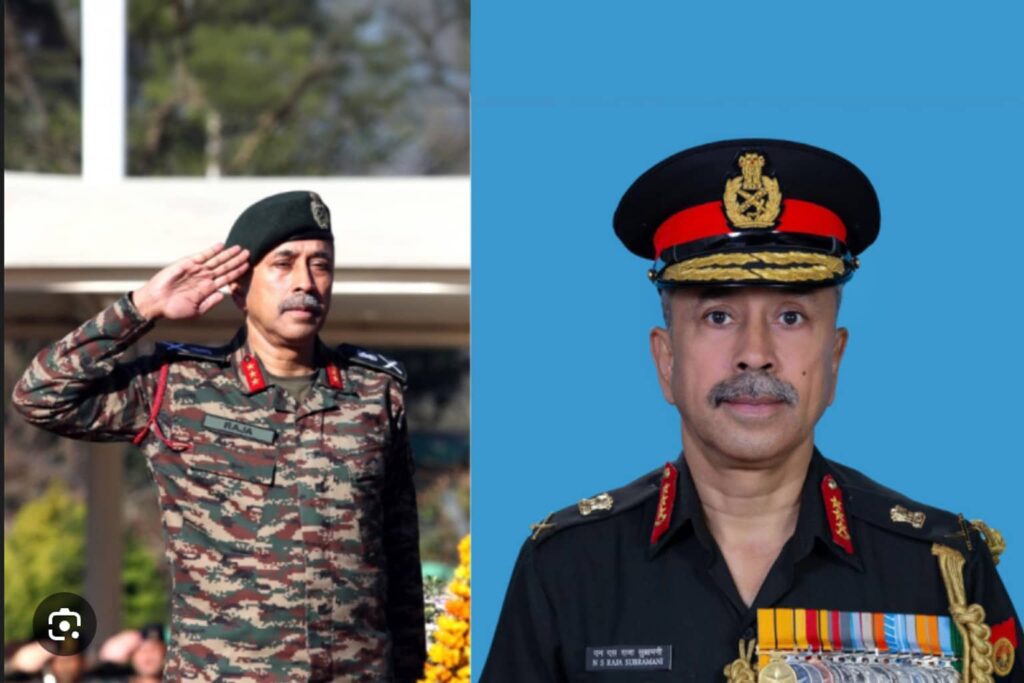
India’s latest CDS appointment matters because the office itself has become much more important than a ceremonial change at the top. The Government has appointed Lt Gen N S Raja Subramani, PVSM, AVSM, SM, VSM (Retd) as the next Chief of Defence Staff, and he will take over from the afternoon of 30 May 2026. He will also function as Secretary, Department of Military Affairs, while the present CDS General Anil Chauhan completes his tenure on 30 May 2026. That means the transition is not just about a new uniform at the top. It is about who now carries one of the most important reform responsibilities in India’s defence structure.

For many readers, the term CDS still sounds like a senior military title. But the office was created for a much larger purpose. Officially, the CDS heads the Department of Military Affairs, functions as its Secretary, acts as the Principal Military Advisor to the Raksha Mantri on all tri-service matters, serves as the Permanent Chairman of the Chiefs of Staff Committee, administers tri-service organisations, and is expected to bring jointness in operations, logistics, transport, training, support services, communications, repairs and maintenance across the three Services. The mandate of the DMA also includes facilitating the restructuring of military commands, including through joint and theatre commands.
That is why this appointment cannot be treated as a routine reshuffle. The CDS is not meant to replace the individual service chiefs. The Army Chief, Navy Chief and Air Chief still lead their own services. The CDS works at the level above single-service priorities, where coordination, integration and long-term force planning begin to matter more than institutional silos. In practical terms, the office exists to push the armed forces towards a system where India’s military response is designed more as one integrated capability rather than three separate streams acting in parallel.
This becomes especially important because India’s defence reforms are still unfinished. Official government material shows that work is underway on Integrated Theatre Commands and Integrated Battle Groups, with the aim of unifying Army, Navy and Air Force capabilities by geography and function to improve synergy and combat effectiveness. The same official note says these reforms are part of a wider shift toward multi-domain operations, bringing space and cyberspace together with the traditional domains and pushing digitisation and data-centric warfare. In that environment, the next CDS is not simply inheriting a post. He is inheriting an unfinished reform agenda.
That is why continuity matters in this transition. The Government has announced the successor before the current CDS leaves office, which helps avoid a break in a reform process that depends on institutional coordination and trust. Theatre-command thinking, joint planning and higher defence restructuring cannot move forward in bursts of publicity. They require sustained leadership, inter-service dialogue and administrative authority. Because the CDS is also Secretary of the Department of Military Affairs, the role influences not just military advice but also how reform files move within the defence system itself.
The office has also gained more practical weight in recent years. In June 2025, the Raksha Mantri authorised the CDS and Secretary, DMA to issue Joint Instructions and Joint Orders for all three Services, marking a shift away from the earlier system where such instructions for multi-service matters were issued separately by each service. That move showed that the CDS role is becoming more operationally meaningful inside the military system, not less. It also means the next CDS will be judged by whether he can use the office to turn policy language about jointness into everyday defence practice.
This is where the appointment becomes important for a wider audience beyond defence professionals. Military reform affects how efficiently resources are used, how procurement priorities are aligned, how training evolves and how future conflicts are prepared for. Official DMA material says the department was created to facilitate optimal utilisation of resources and promote jointness among the three Services. That means the CDS sits at the point where military structure, budgeting logic and operational thinking increasingly connect. So while the role may look distant from ordinary public discussion, its success or failure shapes how ready India’s armed forces are for the kind of threats that no longer fit neatly into land, sea or air alone.
This is also why the next CDS will be judged less by headline visibility and more by institutional progress. The toughest part of higher defence reform in India is not announcing ambitious ideas. It is getting large institutions with strong service identities to move together without losing operational clarity. The official government narrative already frames jointness and integration as prerequisites for theatre commands and for a broader shift to multi-domain warfare. The next CDS therefore takes charge at a time when the system will expect not just strategic messaging, but actual progress in doctrine, structure and coordination.
In the end, this appointment matters because it reflects where India’s defence conversation now stands. The country no longer needs the CDS office only as a symbol of reform. It needs the office as a working instrument of reform. Lt Gen N S Raja Subramani steps into the role at a moment when the three Services are expected to think more jointly, the Department of Military Affairs has a defined charter around restructuring and jointness, and the future of warfare is officially being discussed in terms that include cyber, space, digitisation and integrated operations. That is why this is not just a leadership change. It is a test of whether India’s defence reforms can keep moving from concept to institution.



Leave a Reply