

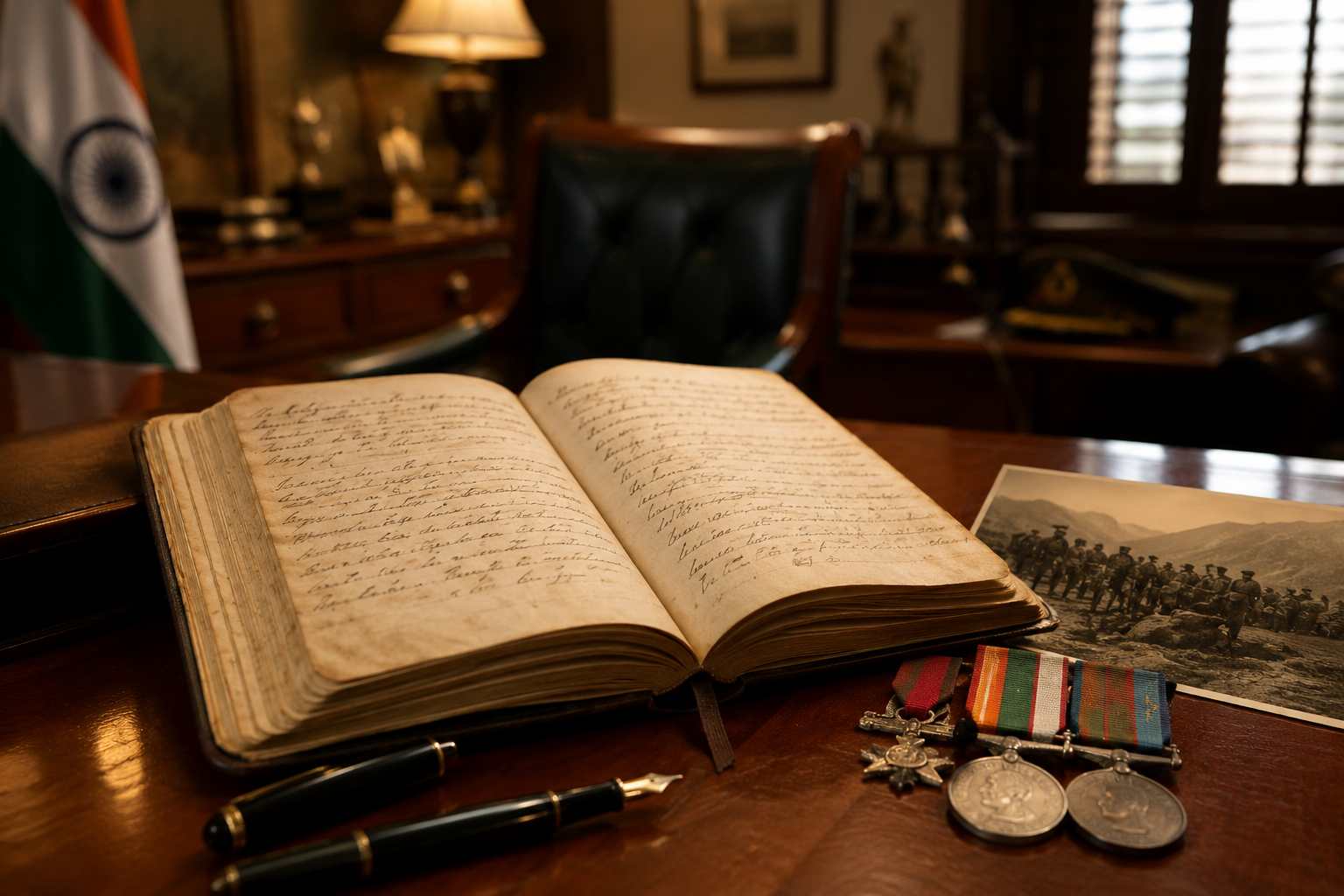
Military institutions are usually remembered through their largest moments. Wars, medals, operations, commanders, victories and turning points naturally become the most visible parts of their public story. These are essential pieces of history, and no serious nation can afford to neglect them. But an army is not built only through events that appear in national headlines. It is also built through the daily life of the soldier. Through routine. Through endurance. Through duty carried quietly. Through the private discipline that rarely enters official files.
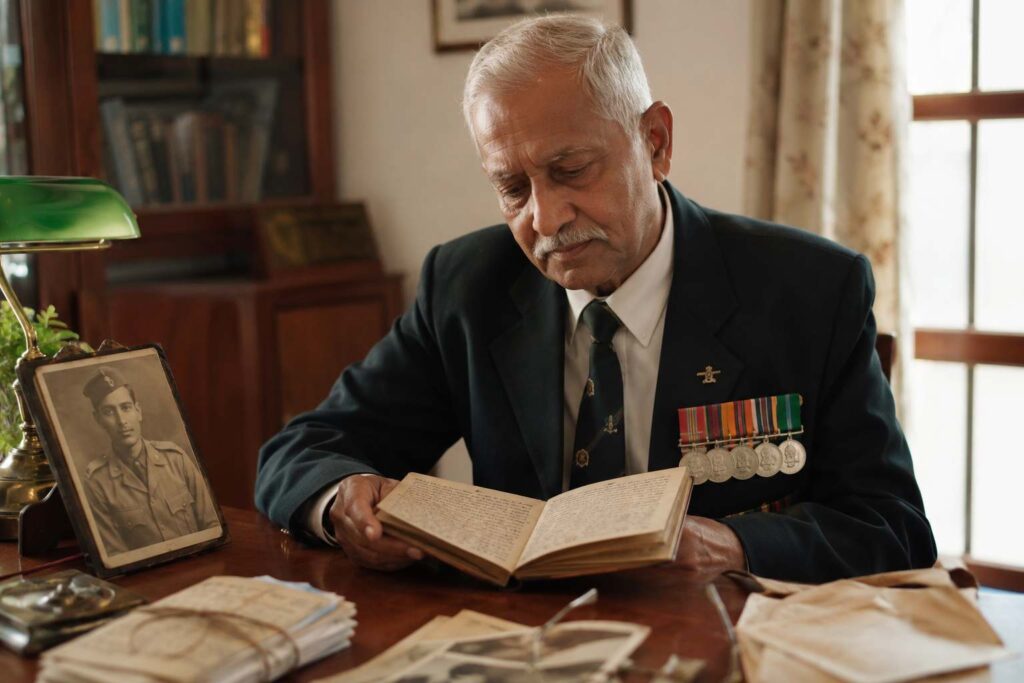
That is why the release of Ek Sainik Ki Diary deserves to be seen as something much deeper than a book launch.
It reminds us that military history is incomplete when it contains only the voice of institutions and not the voice of the soldier himself.
A formal military record tells us where a unit moved, what order was passed, which rank was held, what campaign was fought and what result followed. Those things matter because they create the official structure of history. But a personal diary does something different. It allows us to enter the emotional and moral landscape of service. It shows not only what happened, but how military life was lived. It gives us access to memory before memory becomes summary.
That difference is powerful.
A soldier’s diary can capture the texture of service in a way no citation or file note ever can. It can hold the silence of a difficult day, the burden of separation from family, the ordinary discipline of barrack life, the pride of wearing the uniform and the inner strength needed to continue without public recognition. These are not small details. They are often the very substance of military character.
That is what makes this kind of work important for the nation as well as for the Army.
When a soldier’s personal account enters public space, the country is invited to see military service from inside rather than from a distance. The uniform becomes less symbolic and more human. The idea of sacrifice becomes more real. The public begins to understand that service is not only about dramatic moments of combat or ceremonial honour. It is also about long years of duty, patience, self-control and loyalty to something larger than oneself.
This matters greatly in the present age.
Modern public understanding of the armed forces is increasingly shaped by visual moments. People see parades, operations, uniforms, weapon systems and short clips of military life. These images have their place, but they can also create a narrow understanding. They can make service look only heroic in a visible sense, while leaving out the quieter and deeper forms of strength that define real soldiering. A diary corrects that imbalance. It slows the reader down and asks him to listen.
And listening is a form of respect.
The story behind Ek Sainik Ki Diary carries this value strongly. A personal military record spanning decades is not important only because of the dates it covers. It is important because it carries the lived witness of a soldier across a changing India. That kind of record helps bridge the distance between national history and personal experience. It reminds readers that the making of military heritage is not done only by famous commanders or celebrated battles. It is also done by the ordinary soldier whose life may never enter the spotlight, yet whose service becomes part of the institution’s moral foundation.
That message is deeply relevant for younger generations.
Many young Indians admire the armed forces, but admiration alone is not understanding. To truly value the military, one must understand the depth of the life it demands. A soldier’s diary can teach that in a way no slogan can. It can show that service means routine without applause, courage without performance, pressure without complaint and duty without guarantee of recognition. It teaches that military life is not built only on moments of glory. It is built on years of restraint and commitment.
This is why such a book is not merely a family archive made public. It becomes a national resource.
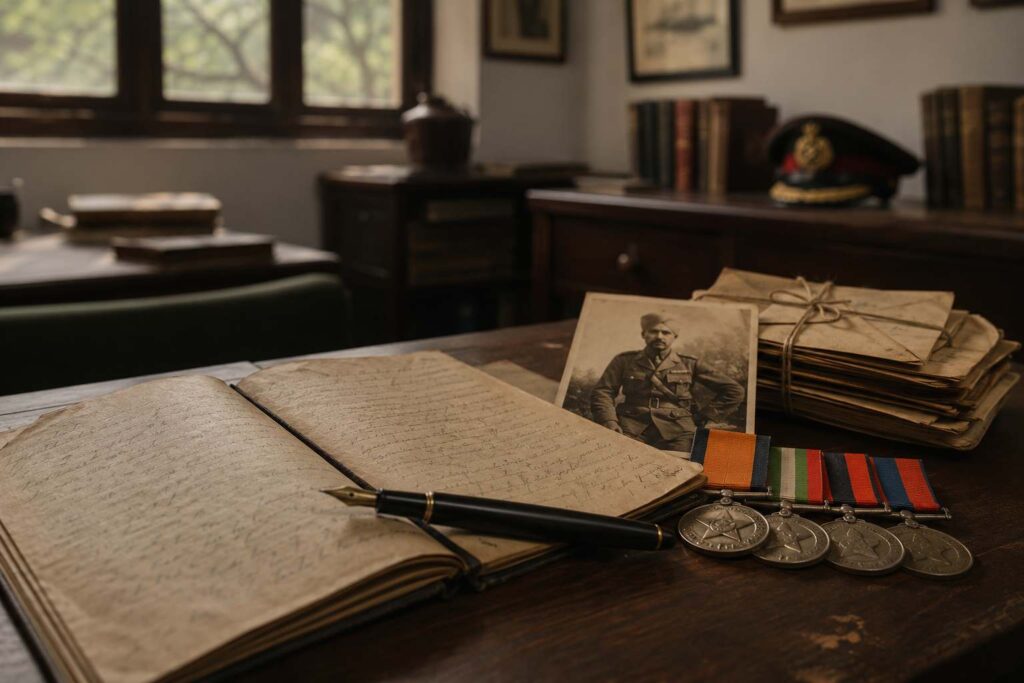
It also sends an important message to military families across the country. In many homes, precious service memories still lie in trunks, files, notebooks, old letters and fading photographs. Families often assume that unless the person was a major war hero or a very senior officer, those memories belong only to the private sphere. But that thinking causes the nation to lose an enormous part of its military inheritance. The lived experience of an ordinary soldier can be historically valuable precisely because it is ordinary. It shows what service really looked like on the ground, beyond official language.
In that sense, preserving a diary is also preserving a social history.
In India, military service has long shaped not just individual careers, but family identities, village culture and community values. In many households, the soldier becomes a source of discipline, pride and public-mindedness long after retirement. His habits influence younger relatives. His service story shapes how children understand the nation. His memory often survives in spoken family tradition even when it is never formally written down. A preserved diary turns that private inheritance into a contribution to collective memory.
That is why books like this matter beyond literature.
They strengthen continuity.
An army remains strong not only when it modernises equipment or sharpens doctrine, but also when it remembers the kind of men who carried its values across generations. Institutions that forget their human stories slowly become flatter in spirit. They may remain efficient, but they risk losing depth. Personal military writing restores that depth. It reminds the institution and the nation alike that honour is not only worn on the chest. It is also carried in memory, conduct and character.
There is another reason this matters today. We live in a time when public attention moves too quickly. Important stories are often reduced to headlines, clips and fragments. But some forms of memory cannot survive in fragments. A diary resists haste. It invites reflection. It asks the reader to enter the rhythm of another life. That alone makes it valuable in an age of speed.
In the end, Ek Sainik Ki Diary stands for something larger than one soldier’s recollections.
It stands for the idea that the Army’s history is not complete without the soldier’s own voice. Official archives can preserve the framework of service, but personal writing preserves its soul. One tells us what the institution did. The other tells us what the soldier became while serving it.
And that is why a soldier’s diary can tell India something military records alone never can. It can reveal the human truth that gives meaning to uniform, duty and sacrifice. When that truth is preserved, the nation does more than remember one life. It honours the deeper spirit of service itself.



Leave a Reply