
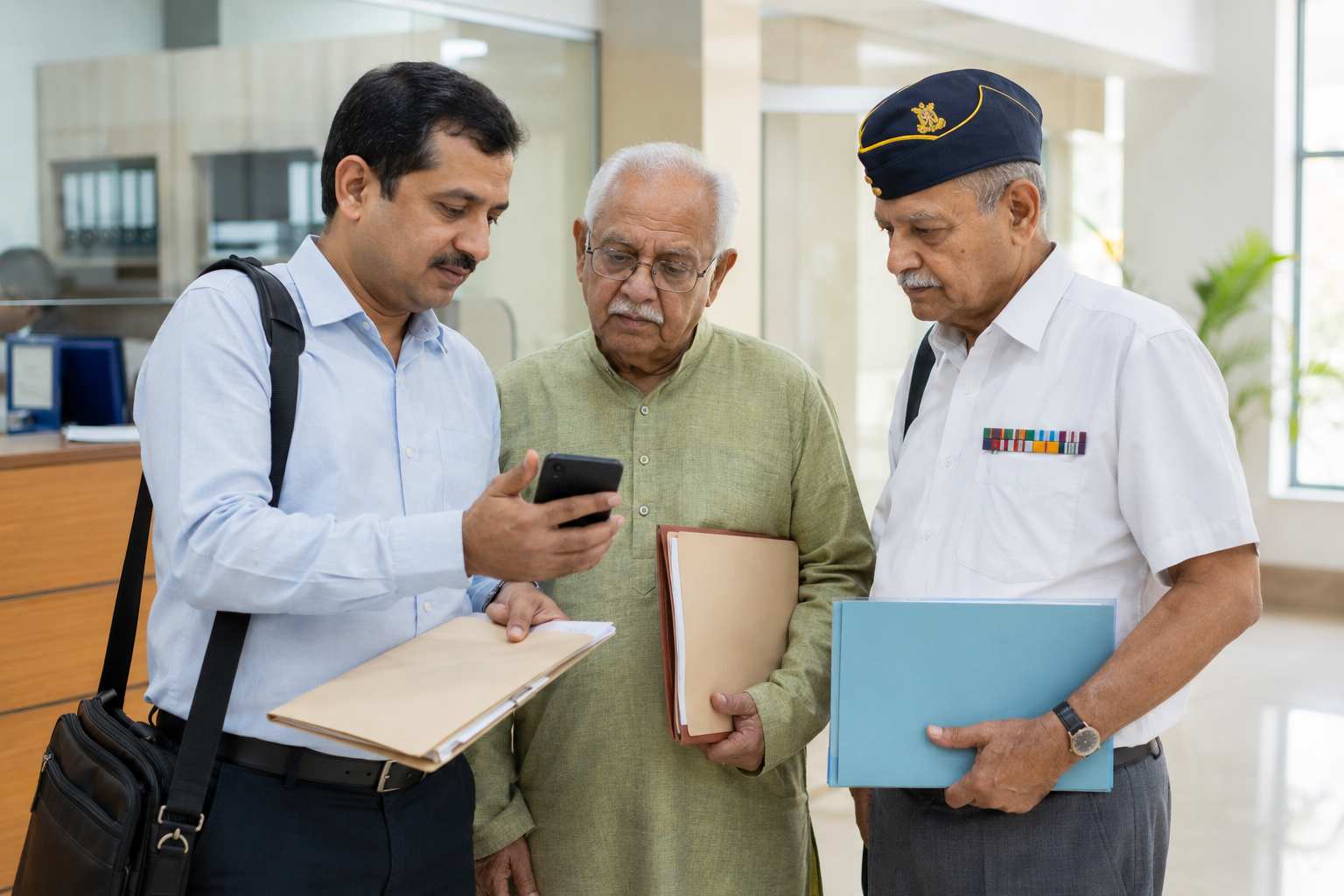
For months, the 8th Pay Commission was mainly discussed through expectations. Employees were debating fitment factor, pensioners were tracking revision hopes, and service associations were drafting long lists of demands. But the process has now moved into a more practical phase. The official 8th CPC website no longer shows only the memorandum route. It now also has a visible Link for Appointment/Meeting page, which means the Commission’s consultation process is expanding from written submission to structured public interaction.
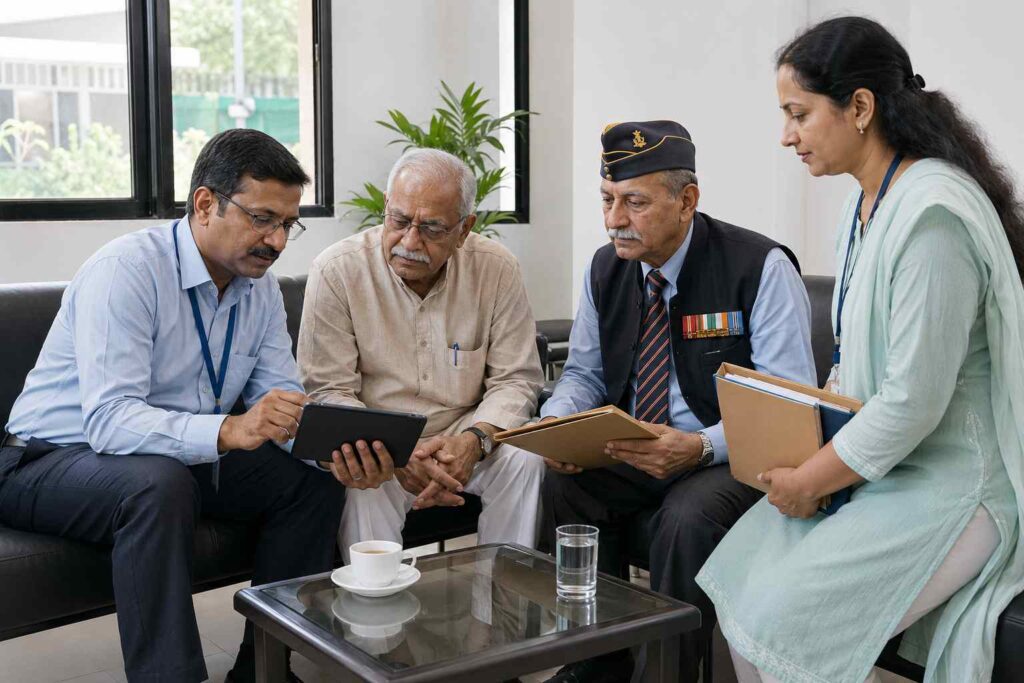
That may sound like a small website update, but for stakeholders it changes the nature of participation. Until now, many employees and pensioners were focused mainly on whether they had submitted their demands online. Now there is also a formal route to seek a meeting with the Commission during specific city interactions. This makes the process more transparent, but it also makes it more disciplined. The system is clearly telling people that participation is not about forwarded messages, emotional complaints or scattered PDFs. It is about entering the official process in the correct sequence.
The official appointment page currently lists links for Hyderabad on 18 and 19 May 2026, Srinagar from 1 to 4 June 2026, UT of Ladakh on 8 June 2026, and Delhi interactions on 13 and 14 May 2026. The homepage of the Commission also carries these interaction notices under the “What’s New” section, which shows that these are not informal arrangements. They are part of the active consultation stage of the 8th CPC process.
This is where the Memo ID becomes crucial.
For many readers, Memo ID may still look like just an acknowledgement number generated after online submission. That understanding is now too limited. Once the appointment process has been linked to city-wise interactions, Memo ID becomes the bridge between your written representation and your request to be heard in person. In simple terms, your complaint becomes serious only when it enters the official system, and the Memo ID is the proof that it has done so. This is a reasoned reading of the appointment and memorandum process together, and it is strongly supported by the structure of the official website.
That is why the order of steps matters so much. Some people may assume they can first request an appointment and then prepare the memorandum later. The official process suggests the opposite. The memorandum page states clearly that structured submissions are the accepted route for employees, pensioners, defence personnel, associations, unions, ministries and departments. Only after that does the appointment route become meaningful. A meeting without a submitted memorandum is weak. A memorandum backed by a valid Memo ID gives the request real standing.
The Commission has also made the submission rules strict enough to remove confusion. The official memorandum page says the last date for submission of responses is 31 May 2026 and that all submissions must be made only through the specified online link. It explicitly says that paper-based memoranda, hard copies, PDFs and emails are not being considered or entertained. This single instruction matters more than many employees realise. It means an issue discussed widely outside the official portal can still remain outside the official record.
That is why this stage should be taken seriously by every category of stakeholder.
For serving employees, this is the time to put forward issues such as minimum pay, fitment factor, pay matrix anomalies, annual increment, MACP, promotion-related distortions, HRA, TA or department-specific problems. For pensioners, the key concerns may involve pension revision, family pension, gratuity, commutation, DR, medical facilities and long-pending anomalies. For defence personnel and veterans, the issues may include Military Service Pay, disability pension, OROP-related concerns, hardship allowances, ECHS, rank-based anomalies and early retirement-linked pension impacts. The Commission’s memorandum page clearly includes defence forces personnel and pensioners among eligible stakeholders, so such concerns are meant to be part of the official consultation process.

This is also why a good memorandum matters more than a long speech.
The Commission will not judge seriousness by emotion alone. It will respond more effectively to a structured representation that identifies the issue, explains who is affected, sets out the existing problem and clearly states the correction being sought. A vague complaint that “salary should increase” or “pensioners are suffering” may express frustration, but it does not create a strong policy case. A short, factual memorandum built around specific demands has much more value in a formal consultation environment. That is an inference, but it follows directly from the Commission’s insistence on structured submissions.
For associations and unions, the responsibility is even greater. Delhi, Hyderabad, Srinagar and Ladakh interactions are not ordinary public events. They are limited consultation opportunities. If an association is seeking a meeting, it should already have its memorandum filed, its Memo ID ready and its points prioritised. The purpose of such interaction is not to repeat everything that was already discussed on social media. It is to reinforce the strongest issues that deserve the Commission’s direct attention.
The timing also matters. Because the appointment links are city-specific and date-specific, waiting until the very last day can create unnecessary risk. OTP delays, login issues, incomplete information and basic filing mistakes become much more dangerous when a stakeholder tries to do everything in a hurry. The smart approach is simple: prepare early, submit the memorandum properly, save the Memo ID carefully, and then use the official appointment page for the relevant city.
The larger message behind this update is important. The 8th Pay Commission is no longer just a topic of headlines and future speculation. It is now in a stage where the quality of participation can influence the quality of recommendations. The Commission has been constituted by the Government of India, is functioning from Chanderlok Building in New Delhi, and is actively running notices, appointments and consultation channels. That means this is the stage where serious stakeholders should stop depending on rumours and start depending on process.
In the end, the lesson is straightforward. The appointment link being live is useful, but the real power is still in the memorandum. If your issue is not filed properly, it is only a complaint. Once it is submitted through the official system and backed by a Memo ID, it becomes a representation the Commission can actually examine. That is why, in the current 8th CPC process, your Memo ID may matter more than your complaint itself.


Leave a Reply