


When defence news appears in public, the spotlight usually falls on big-ticket military stories. New missiles, fighter jets, drones, guns, surveillance systems and electronic warfare platforms quickly grab attention. These are important stories, and they deserve coverage. But military strength is not built by equipment alone. It is also built by what the soldier can do with his body and mind under pressure.
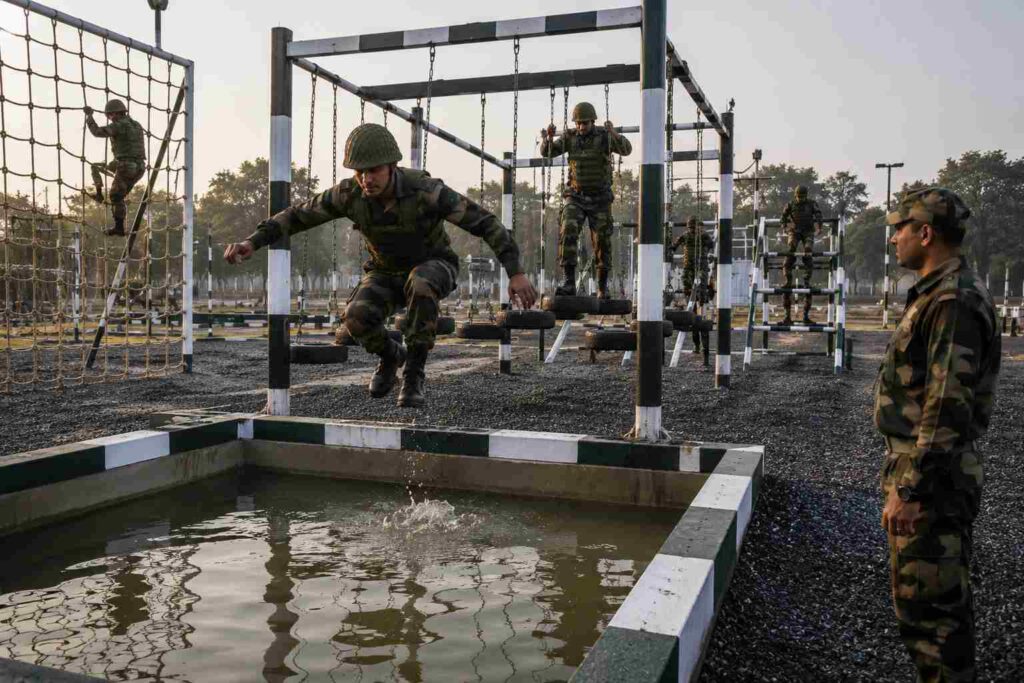
That is why the Army’s new all-weather synthetic obstacle course deserves more attention than it may appear to get at first glance.
On the surface, it may look like a modern training facility and nothing more. But in reality, it represents a deeper shift in military preparedness. It tells us that the Army is investing not only in weapons for future wars, but also in the physical and mental conditioning that turns a recruit into a reliable combat soldier.
That distinction matters.
A battlefield does not offer ideal conditions. A soldier may have to move in rain, darkness, heat, slippery terrain, broken ground or high-stress situations where a moment of hesitation can have serious consequences. Real operations do not stop because the weather is bad or because the ground is difficult. If training gets interrupted every time conditions become uncomfortable, then the Army risks building a force that is physically fit on paper but less prepared in practice.
An all-weather obstacle course addresses that problem directly.
It creates a platform where physical training can continue more consistently across seasons. That consistency is important because fitness is not built through occasional effort. It is built through repetition, discipline and progressive challenge. When the training infrastructure supports year-round use, the Army gets a better chance to maintain that rhythm without depending too heavily on ideal conditions.
But the real value of obstacle training goes far beyond basic fitness.
Obstacle courses test a combination of qualities that matter in military life. They build speed, balance, agility, grip, endurance, coordination and body control. More importantly, they push a soldier to make decisions while under physical strain. Crossing a wall, negotiating a narrow beam, climbing a rope, crawling under barriers or landing safely after a jump may look like simple tasks from a distance, but together they create a training environment that forces the body and mind to work as one.
That is exactly what soldiering demands.
A soldier in the field is rarely using strength alone. He is also using judgment, rhythm, confidence and adaptability. He must be able to move fast without losing control, stay alert while fatigued and keep functioning even when the body wants to slow down. Obstacle-based training is valuable because it develops these qualities in a practical way rather than in isolation.
This is where the synthetic, all-weather design becomes especially useful.
Traditional obstacle courses have always been effective, but they can also face limitations. Mud, waterlogging, uneven wear, damaged surfaces and weather-linked maintenance can reduce training quality or create avoidable risk. A well-designed synthetic course offers a more durable and standardised environment. That does not mean it makes training easier. It means it makes training more usable, more consistent and often safer for repeated high-volume use.
For the Army, that is a meaningful advantage.
When training conditions are more controlled, instructors can focus better on performance and technique. They can compare results more fairly, track improvement over time and identify weaknesses more clearly. That matters because military training is not only about pushing people hard. It is also about measuring whether they are improving in the right direction.
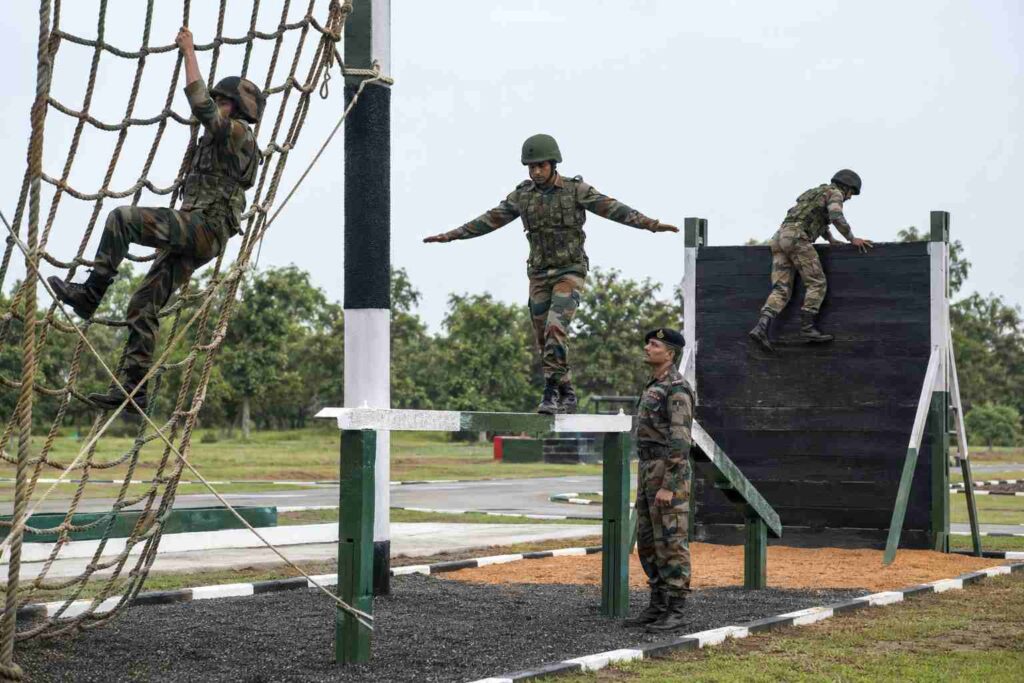
Another important feature is the reported support for night training.
This makes the course even more relevant to real military life. Soldiers do not operate only in broad daylight. Many real situations involve poor visibility, fatigue and limited reaction time. A training environment that allows obstacle work under lower-light or night conditions helps build confidence where it matters most. It teaches the soldier not only to perform when everything is visible, but also to stay effective when the environment becomes less comfortable and more uncertain.
That is a major part of combat readiness.
The Army’s move also reflects something broader about how modern military training is evolving. Today’s soldier may carry far more than soldiers of earlier generations. Protective gear, communication equipment, sensors, optics, batteries and other mission-specific items all add to the physical load. Technology may improve capability, but it also increases the burden on the body. A soldier who is not physically prepared will struggle to make full use of modern systems, especially in difficult terrain.
So in a strange but important way, better technology makes physical fitness even more important, not less.
This is a point that young defence aspirants should understand clearly. Many candidates preparing for military entry spend a lot of time thinking about exams, cut-offs and written preparation. Those things matter. But the Army is not only searching for people who can answer questions on paper. It is also looking for people who can push through discomfort, stay steady under stress and keep moving when conditions become hard.
That is what obstacle training represents.
It also builds something that cannot be measured easily on a stopwatch: confidence. Every obstacle teaches a small lesson. The wall looks too high until it is crossed. The rope looks difficult until it is climbed. The narrow balance section feels risky until the body learns control. These moments create a kind of self-belief that is vital in military life. A soldier who has repeatedly overcome physical difficulty in training is more likely to remain composed when facing pressure in the field.
There is also a teamwork dimension that should not be ignored.
Military obstacle work often creates trust between soldiers. One helps another over a wall. One gives a hand during a landing. One learns to move in rhythm with the group. This is important because no soldier operates as a completely isolated individual. Unit confidence grows when physical training also strengthens mutual trust. In real operations, that trust can become a lifesaving factor.
At the same time, it is important to stay realistic. An obstacle course alone cannot create a battle-ready force. It is one part of a larger training system. Endurance work, tactical drills, firing, fieldcraft, route marches, combat conditioning, mental resilience and leadership training all remain essential. But physical infrastructure like this obstacle course strengthens the foundation on which those other capabilities are built.
That is why this development should be seen in the right way.
It is not just a story about ropes, walls and beams. It is a story about how the Army is trying to prepare soldiers more intelligently and more consistently for the realities of military life. It shows that soldier readiness is being treated as a serious investment area, not as an afterthought.
And that matters for the country as well.
Military modernisation is often judged by what can be bought. But a nation’s real defence strength also depends on how well its soldiers are trained before the crisis comes. A better training ground may not look as dramatic as a new weapon system, but it can have a deeper effect on readiness over time.
In the end, the message from this new all-weather obstacle course is simple. The Army understands that future battles may involve new technology, new threats and new environments, but the centre of every operation will still be the soldier. If the soldier is faster, fitter, steadier and more confident, the entire force becomes stronger.
That is why this training upgrade matters.
Because before any weapon is fired, it is still the trained soldier who must be ready.



Leave a Reply