


When news comes from a military firing range, people usually expect discipline, precision and control. That is why a death inside such an environment feels especially disturbing. It does not only bring grief. It also brings questions that cannot be ignored.
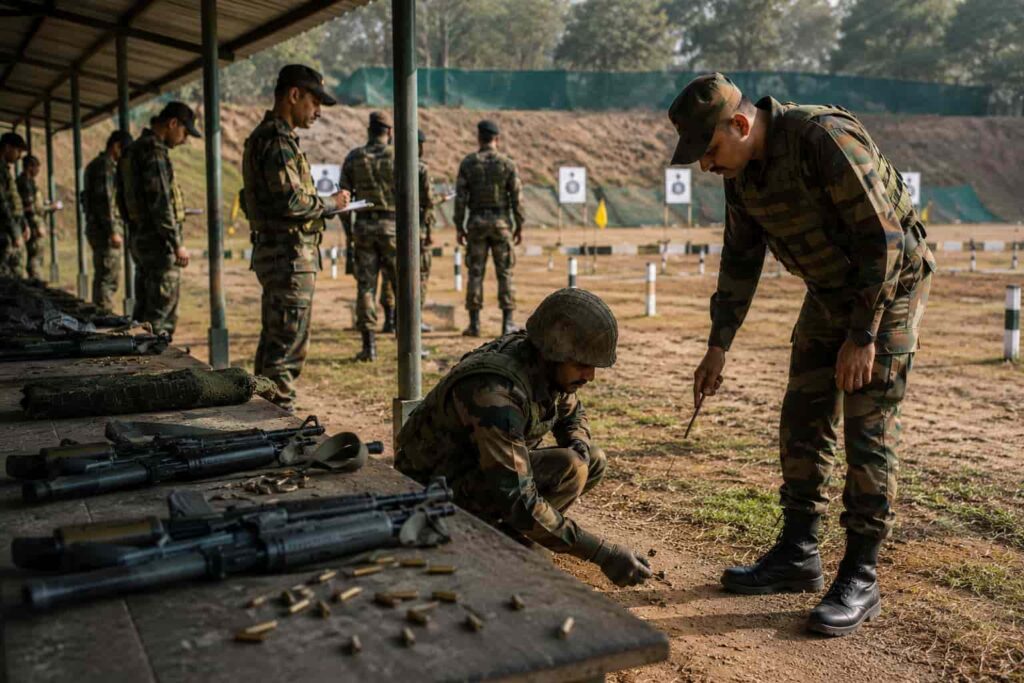
The Pulgaon case has become exactly that kind of story.
At the centre of it is the death of DSC Subedar Major Om Bahadur Khand during firing practice at Central Ammunition Depot Pulgaon on 15 May 2026. Initial information from the defence side reportedly described the episode as a firing accident during routine practice. But the matter quickly became much more serious when later reports said Wardha police registered an FIR under BNS Section 103(1) against an Army Major and moved to investigate the case under criminal law.
That is why this story cannot be treated lightly.
A soldier has died. A family has lost someone who wore the uniform with honour. Serious allegations have entered the public domain. And now both the Army system and the civil legal system are under pressure to establish what really happened. In such a situation, the public does not need noise. It needs patience, honesty and facts.
One of the hardest things in a case like this is resisting the urge to jump to a conclusion.
The moment an FIR is registered in a sensitive matter, people tend to divide into camps. Some immediately begin calling it murder. Others begin defending the institution before the investigation has even progressed. Neither response helps. An FIR is not a conviction. But at the same time, it is not a minor step either. It reflects that the matter is grave enough to be investigated through a criminal process.
That is why both caution and seriousness are necessary.
Subedar Major Om Bahadur Khand was not an anonymous figure in uniform. A Subedar Major is a senior JCO rank, a position that carries deep respect in the military structure. In the Defence Security Corps too, such a rank represents experience, steadiness and responsibility. So when a man of that standing dies during a controlled training activity, the shock goes beyond one unit. It is felt by soldiers, veterans and military families everywhere.
There is also a very human side to this story that should not be forgotten.
For the public, this may appear as a legal or defence matter. For the family, it is a personal tragedy. Somewhere, a home is now dealing with the unbearable reality that someone who left for duty did not return. In such moments, headlines can become harsh. Speculation can become cruel. That is why language matters. Tone matters. Dignity matters.
At the same time, truth matters just as much.
A firing range is not an uncontrolled space. It is one of the most regulated environments in military life. Commands are structured. Weapon handling is supervised. Movement is restricted. Safety procedures exist for a reason. So if a fatal incident still takes place, the system owes everyone a serious answer. Not because the Army must be attacked, but because the Army itself stands strongest when it examines such events honestly.
The key question is straightforward, even if the answer may be complex: what exactly happened on that range?
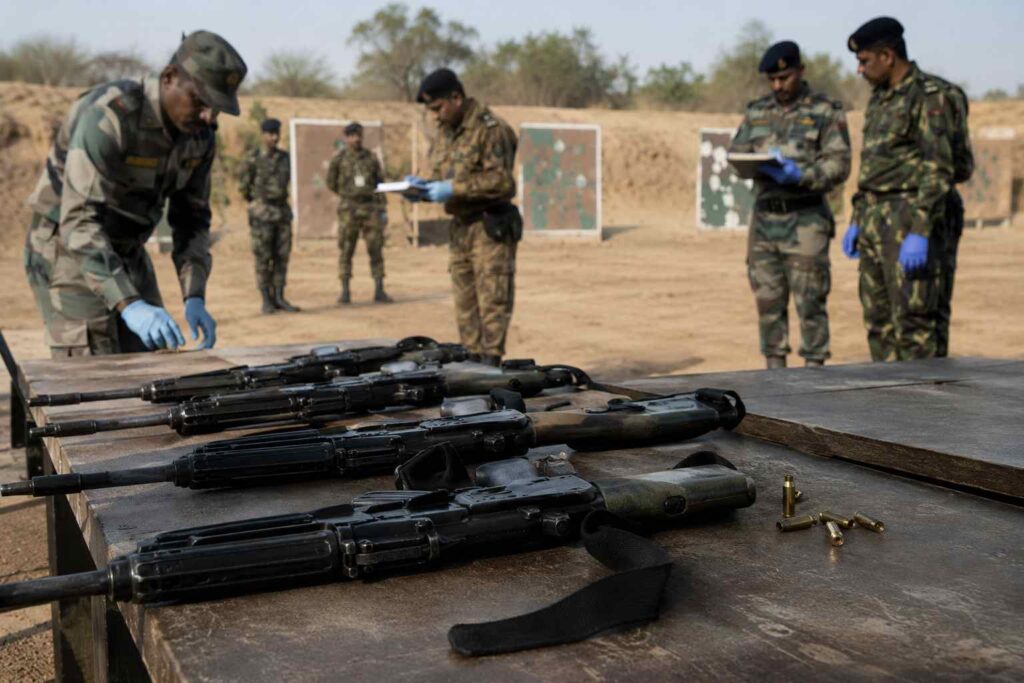
That question will not be answered by opinion. It will be answered by evidence. Investigators will need to examine witness accounts, weapon handling procedure, range commands, firing positions, timing, supervision, ballistic findings, medical reports and the physical layout of the range. The sequence of events will matter. The position of the weapon will matter. The range protocol will matter. Small details may decide the entire understanding of the case.
That is why this is no longer just about an accident report.
It is now about whether the facts support an accident, negligence, wrongful handling, intentional action, or some other explanation entirely. And only a careful investigation can separate one possibility from another.
This is also where the legal complexity of the matter becomes important.
Because the incident involves a serving Army officer and took place inside a sensitive defence establishment, both military procedure and civil criminal law may come into play. The Army has its own mechanisms for inquiry, discipline and legal action where applicable. The police, once they register a criminal case, move under a different legal framework. To an outsider, that may look confusing. But in reality, it simply means the case has entered a zone where law, evidence and jurisdiction must be handled carefully.
For the Army, the stakes are very high.
The military runs on discipline, but discipline is sustained by trust. A soldier must trust the officer leading him. A JCO must trust the system around him. A family must trust that the institution will not hide behind procedure if something goes wrong. When such an incident occurs, the Army is not weakened by fair scrutiny. It is weakened only if truth is avoided.
For the police, too, the responsibility is serious.
An incident involving the armed forces cannot be investigated casually or theatrically. It demands professionalism, restraint and respect for both the sensitivity of the installation and the gravity of the allegation. The public should expect a proper investigation, not a dramatic one.
This case also leaves behind a wider lesson that goes beyond Pulgaon.
In any live-fire training environment, safety can never become routine. The most dangerous thing in such systems is familiarity without alertness. Procedures begin as life-saving discipline, but if they are treated as routine habit, risk enters quietly. Every range command, every safety check, every weapon clearance step matters because a single failure can destroy a life.
That is why the Pulgaon case deserves to be followed with seriousness, but not sensationalism.
It should not become an excuse to attack the Army as a whole. It should also not become a matter that is brushed away in the name of institutional comfort. The correct position lies in the middle: respect the deceased, respect the process, and insist on truth.
In the end, that is what justice will require here.
Not anger for its own sake. Not defence for its own sake. Not headlines that declare guilt or innocence before the evidence speaks. Justice in a case like this means something simpler and harder at the same time. It means allowing the facts to come out fully, protecting the dignity of the deceased, ensuring fairness for the accused, and making sure that if any failure happened, it is not hidden behind the uniform.
Because when a soldier dies inside a system built on discipline, the institution honours him best not with silence, but with the truth.



Leave a Reply