

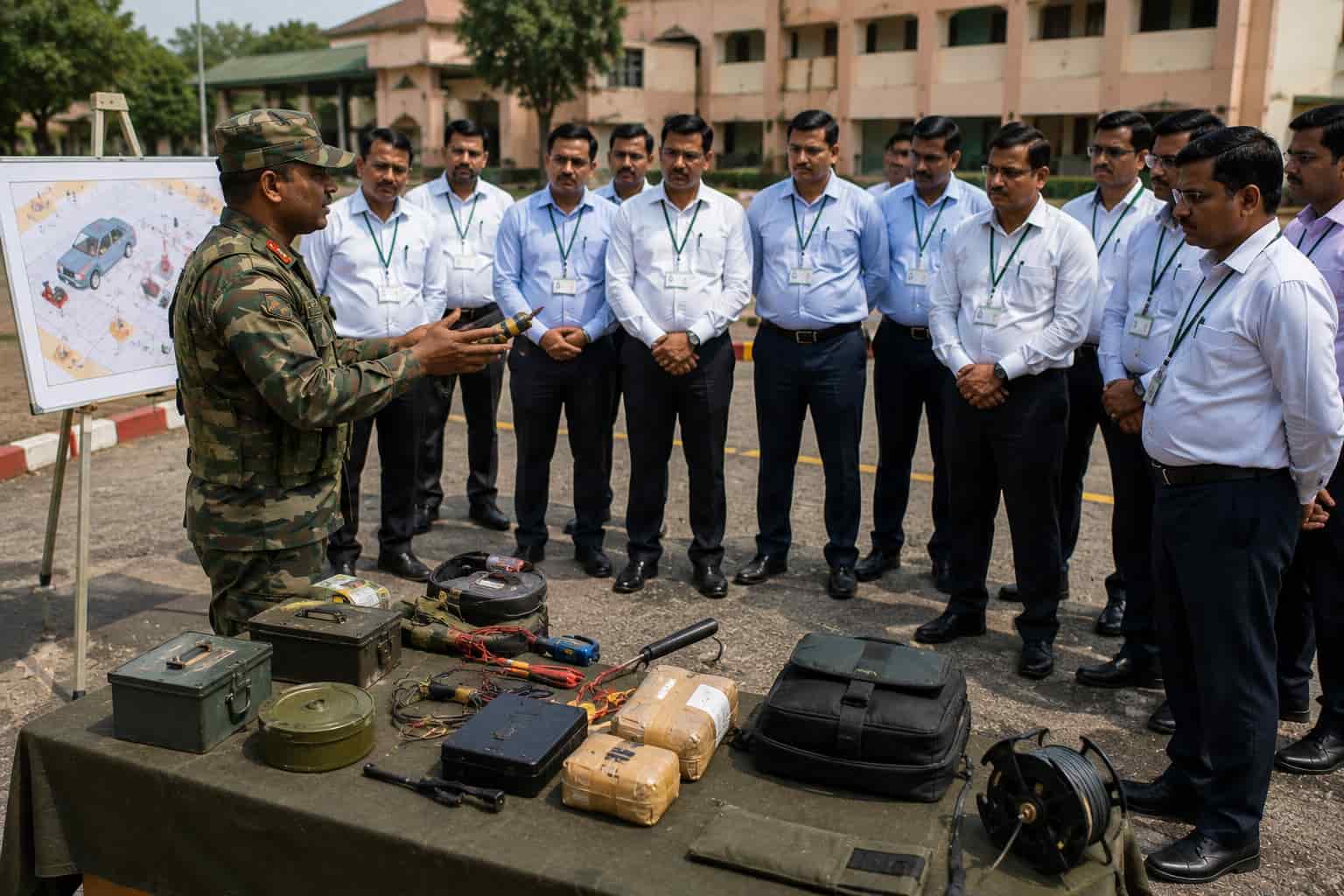
When most people imagine a security threat, they picture a border post, a military convoy or a combat zone. That old picture is no longer enough. In present-day India, security also includes the places that keep public life running normally: financial institutions, transport systems, communication hubs, energy networks and major public offices. A threat to any one of these places can create fear far beyond the immediate location. That is why the Indian Army’s training programme for Reserve Bank of India security managers deserves more attention than a routine institutional update usually gets.
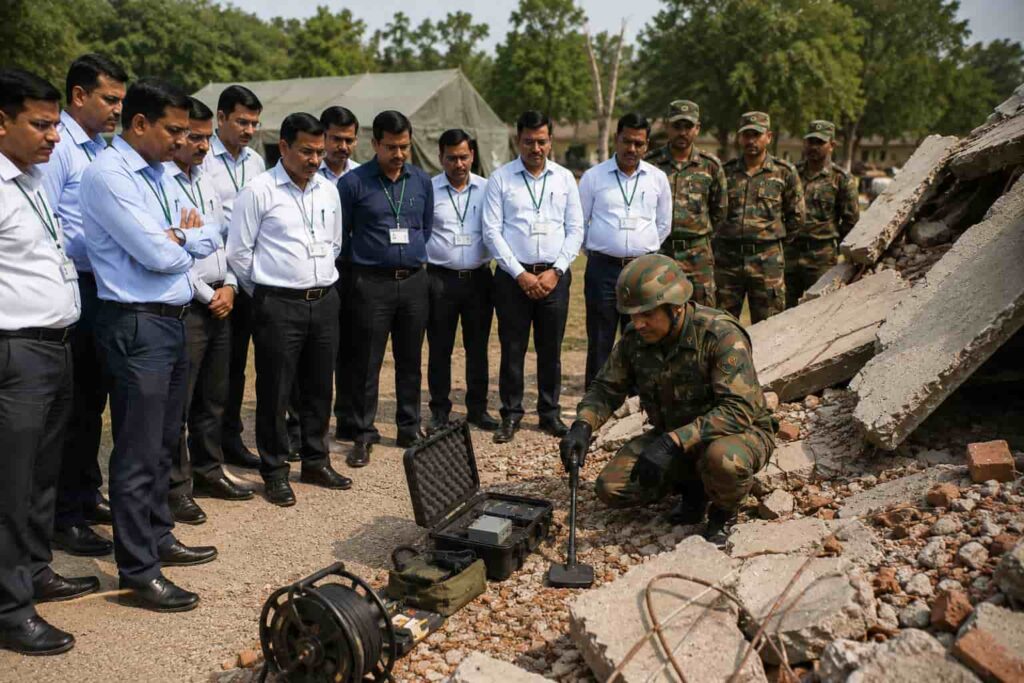
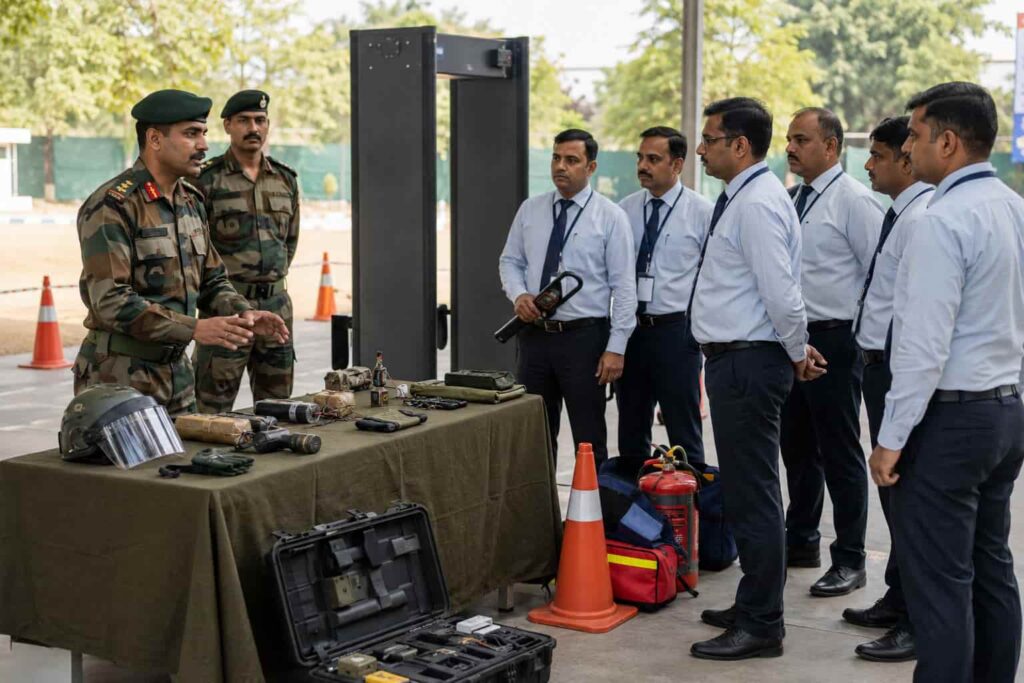
According to the reported details, the College of Military Engineering in Pune conducted a five-day Counter-IED and Disaster Management capsule course for RBI security managers from 11 to 15 May 2026. The programme reportedly covered counter-IED awareness, search and detection methods, rendering-safe procedure, drone-related threat awareness, disaster response and emergency coordination. That is a serious list, and it tells us something important right away: this was not a ceremonial familiarisation visit. It was a practical preparedness exercise.
The fact that the trainees came from RBI is what gives the story its wider meaning.
The Reserve Bank of India is not just another office building with guards and gates. It is part of the country’s financial backbone. Any threat, disruption or security failure at such an institution has consequences that go beyond the premises. It can affect continuity, public confidence and emergency response coordination. That is why protecting financial institutions is also part of protecting national stability. The Army’s involvement in training such personnel reflects an expanding view of what security now means in practice. This is an inference from the role of RBI and the course design, rather than a line quoted directly by officials.
Counter-IED awareness is especially important in this context.
Improvised explosive devices are among the hardest threats to manage because they are unpredictable by nature. They may be hidden, disguised, remotely triggered or placed in ordinary-looking surroundings. The first person to notice something suspicious is rarely a bomb-disposal expert. More often, it is a security staff member, a supervisor or a manager on duty. In those first few minutes, correct action matters more than drama. The ability to recognise warning signs, isolate the area, prevent panic and alert the right authorities can save lives. That is why awareness training is not a luxury add-on. It is the foundation of safe response.
The same applies to the drone-awareness part of the course.
Drone risks are now part of the broader security conversation, especially around sensitive sites. Even when a drone is not used for direct attack, it can still create surveillance problems, panic, confusion or operational vulnerability. A modern security manager therefore needs broader awareness than the old model of guarding gates and checking entry passes. Training that includes drone-related threat understanding shows that institutions are slowly adapting to a more complex threat environment.
Disaster-response training makes the programme even more relevant for ordinary citizens.
In a real emergency, the first organised response inside a building usually comes from the people already posted there. They may have to evacuate staff, block access, protect vulnerable individuals, secure movement routes and coordinate with outside agencies before specialised responders fully take charge. In such moments, confusion can do as much damage as the original threat. A trained security manager helps prevent that confusion. He or she may not neutralise a device or lead a bomb squad, but can still play the crucial role of keeping the first response calm, disciplined and life-focused.
That is also why the Army is a suitable trainer for such programmes.
The Indian Army is usually seen through combat, border deployment and operational readiness. But institutions like the College of Military Engineering also carry deep experience in field engineering, operational safety, emergency procedure and disciplined crisis handling. India has repeatedly seen the armed forces contribute during difficult civilian situations, especially in rescue and disaster-response settings. The Ministry of Defence’s public material on exercise Sanyukt Vimochan 2024 also highlighted multi-agency humanitarian assistance and disaster-relief readiness, which supports this wider role of the armed forces in strengthening response culture beyond purely military settings.
Another important aspect of this story is coordination.
Modern emergencies do not respect departmental boundaries. A suspicious object or serious incident at a critical institution may require local police, medical teams, specialist responders, administrative officials and internal security staff to work together almost immediately. That kind of coordination cannot begin from zero during a crisis. It has to be built beforehand. Training programmes like this help create a shared vocabulary of response. Who alerts whom. When to isolate an area. When to evacuate. What not to touch. How to preserve a scene. These decisions sound basic, but in a real emergency they are often the difference between order and chaos.
For readers, the larger message is simple.
A country is not secure only because it has a strong Army. It is secure when its important civilian systems are also prepared. The border soldier and the institutional security manager do very different jobs, but in a crisis both become part of the same national chain of resilience. If the people guarding critical institutions are better trained, quicker to recognise danger and clearer about emergency procedure, the whole system becomes harder to shake. That is why this RBI training programme should be seen as a national preparedness story, not merely a niche defence update. This is partly an inference, but it is strongly supported by the nature of the course and the institution involved.
In the end, this programme matters because it reflects a smarter and more realistic way of thinking about security.
Threats today can be unconventional, fast-moving and designed to target public confidence as much as physical infrastructure. That means preparation must also move beyond old categories. The Indian Army training RBI security managers is one sign that India’s institutions are beginning to think in that wider frame. A secure nation is built not only by guarding the frontier, but also by making sure the systems behind everyday stability know how to respond when the unexpected happens.



Leave a Reply