
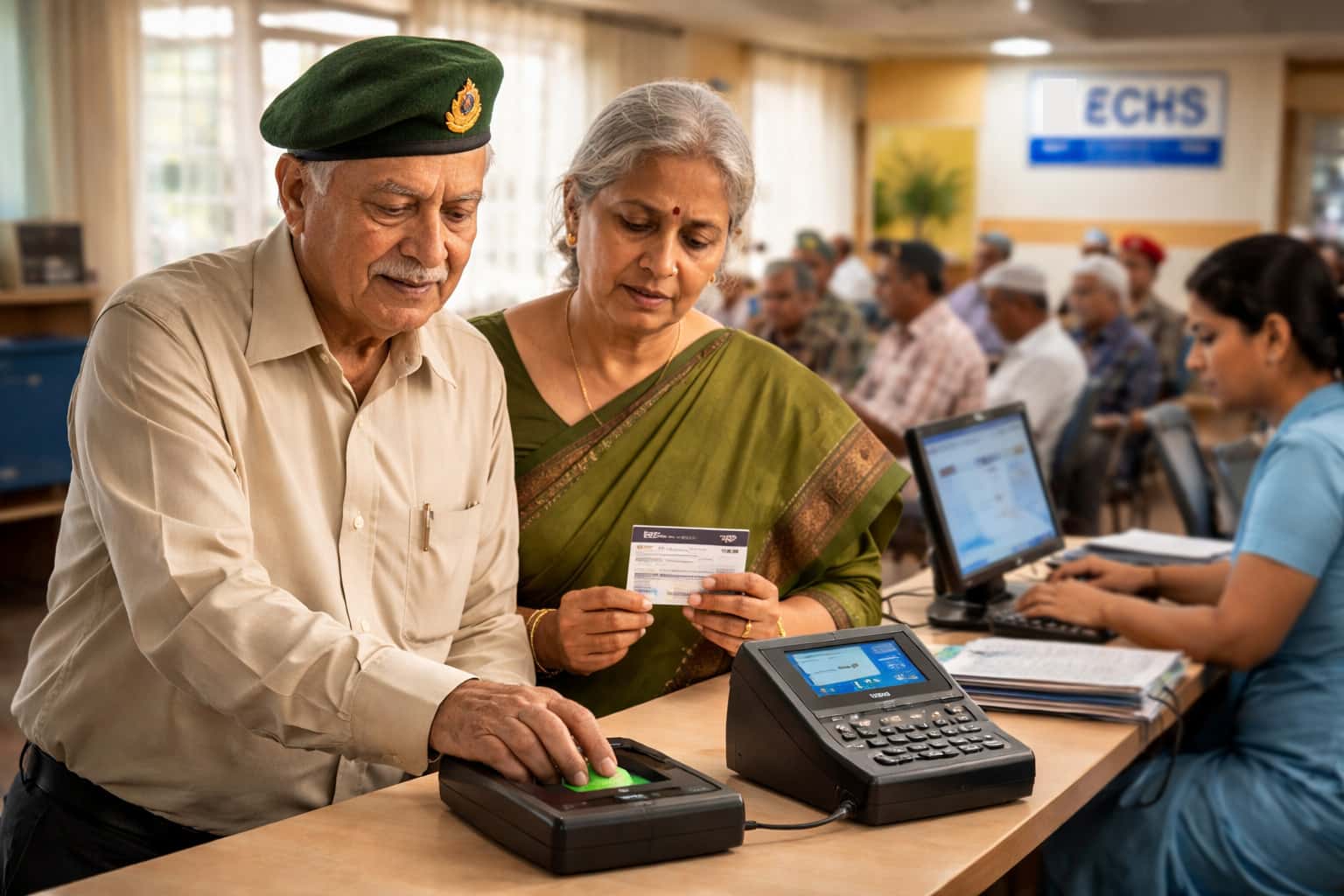
For ex-servicemen, defence pensioners, and their dependents, ECHS is far more than a government health scheme. It is a support system people rely on in moments that matter most. That is why the move towards Aadhaar-based biometric verification is being watched so closely. It may look like a technical update, but for many families, it could directly affect how easily treatment is accessed in the future.
At the centre of this development is a simple concern. Will stronger verification make the ECHS system safer for genuine beneficiaries, or will it create fresh stress for elderly veterans who already face enough hurdles with paperwork, records, and digital processes?
That is the real issue.
The verification shift is linked to the use of Aadhaar-based authentication through the beneficiary verification system, often referred to in discussion around the BSA app. The core idea is straightforward. Before medical services are used, the system wants to confirm that the person taking the benefit is the rightful beneficiary.
On paper, that sounds reasonable. Welfare systems that serve large numbers of people always face the risk of misuse, duplication, or impersonation. In a healthcare setup, even a few cases of wrongful access can damage trust and create trouble for genuine users. If identity misuse leads to records being questioned or benefits being delayed, the person who suffers most is usually the real beneficiary.
That is why this move is being presented as both a security step and a protection measure.
Why this change is important for ordinary veteran families?
Many people assume such an update only matters to those who visit ECHS facilities regularly. In reality, it matters to every beneficiary, because identity verification sits at the base of access. Once a system like this becomes part of the treatment process, readiness becomes essential.
Families with updated Aadhaar details, active linked mobile numbers, and matching records may pass through the system without much difficulty. But those with outdated biometrics, spelling mistakes across documents, or inactive phone links could face avoidable delays. And when treatment is involved, even small delays can become serious.
This is exactly why the issue deserves attention before implementation becomes fully widespread.
Why Aadhaar-based verification is being seen as necessary?
The likely reason behind this shift is concern over misuse. When a public welfare system expands and covers a wide network of hospitals, beneficiaries, and services, the challenge of confirming identity becomes more serious. Manual checks, cards, and records are useful, but they are not always enough to fully prevent impersonation or wrongful claims.
Biometric authentication is being seen as a stronger layer of validation. If used carefully, it can help ensure that medical support reaches the people who are genuinely entitled to it. It can also reduce the risk of fraudulent usage affecting honest beneficiaries later.
In theory, that strengthens the credibility of the scheme. But theory alone is not enough. What matters most is how the system behaves on the ground.
Rollout may be gradual, and that is actually good news
A change of this scale is unlikely to appear everywhere in one step. It is more likely to move in phases. That matters because phased implementation gives authorities a chance to test the process, identify problems, and correct them before the system is expanded more broadly.
For beneficiaries, that phased approach creates an important window. It allows time to prepare rather than react in panic later. In a scheme that serves senior citizens, widows, dependents, and families across urban and rural regions, that preparation period is valuable.
People who act early will almost certainly face less stress than those who wait until verification becomes unavoidable.
What veterans and dependents should do now?
The smartest approach is not to worry, but to get ready.
Start with biometric status. Many senior citizens have fingerprint issues because biometric scans become weaker with age. If fingerprints do not register properly, verification can fail even when the person is genuine. Updating biometric details at an authorised Aadhaar centre can help reduce that risk. Where available, iris data may also help as a useful backup.
Next, check the Aadhaar-linked mobile number. In many digital verification systems, OTP support becomes important when biometric matching is weak or delayed. If the linked number is inactive or unavailable, a small issue can become a bigger problem.
Document consistency is another area families should not ignore. Names, dates of birth, and related details should match across Aadhaar, ECHS records, and pension documents as closely as possible. Digital systems are often strict, and even minor mismatches can lead to confusion.
It is also wise to keep all essential papers together. Aadhaar card, ECHS card, PPO details, and dependent records should be organised in one place so they are easy to produce if verification support is needed.
These steps are simple, but they can save a great deal of trouble later.
The real-world challenges cannot be ignored
This is where the issue becomes more complicated. A reform can be well-intentioned and still create practical hardship if it is applied without flexibility.
Older beneficiaries often face fingerprint mismatch, limited phone access, mobility issues, and record inconsistencies. Some may not use smartphones. Some may not remember which mobile number is linked to Aadhaar. Some may discover only at the last moment that spellings differ across official documents.
These are not rare exceptions. They are common, everyday realities for many veteran families.
So the success of this reform will not depend only on how secure the technology is. It will depend on how humanely it is implemented. There must be backup options, support at the ground level, and a system that helps genuine beneficiaries rather than punishing them for technical difficulties.
Can this reform actually improve ECHS for genuine users?
Yes, it can.
If implemented properly, stronger verification can help reduce misuse, improve confidence in the system, and protect real beneficiaries from the consequences of identity fraud. Over time, that could support smoother service delivery and a more reliable treatment process for those who truly depend on ECHS.
But this benefit will only be felt if the reform stays balanced. Security is necessary, but so is compassion. A system that stops fraud but confuses senior citizens will not be seen as successful. A system that protects resources while still making treatment access smooth for genuine users has a far better chance of earning trust.
That balance is what will decide the final outcome.
What families should remember from this development?
This is not a routine paperwork update that can be ignored. It has the potential to become an important operational shift in the ECHS system. For that reason, veterans and dependents should treat it as a preparation alert.
The message at this stage is clear. Do not panic, but do not delay either.
Update biometrics where needed. Check the Aadhaar-linked mobile number. Correct document mismatches. Keep all key records ready. These small actions can make a major difference if biometric verification becomes a regular part of treatment access.
For veteran families, the issue is not just whether the reform is right or wrong. The bigger issue is whether genuine beneficiaries are prepared before the system reaches them. Those who prepare early are likely to face fewer problems later.
That is why this change deserves attention now, while there is still time to act calmly and carefully.