
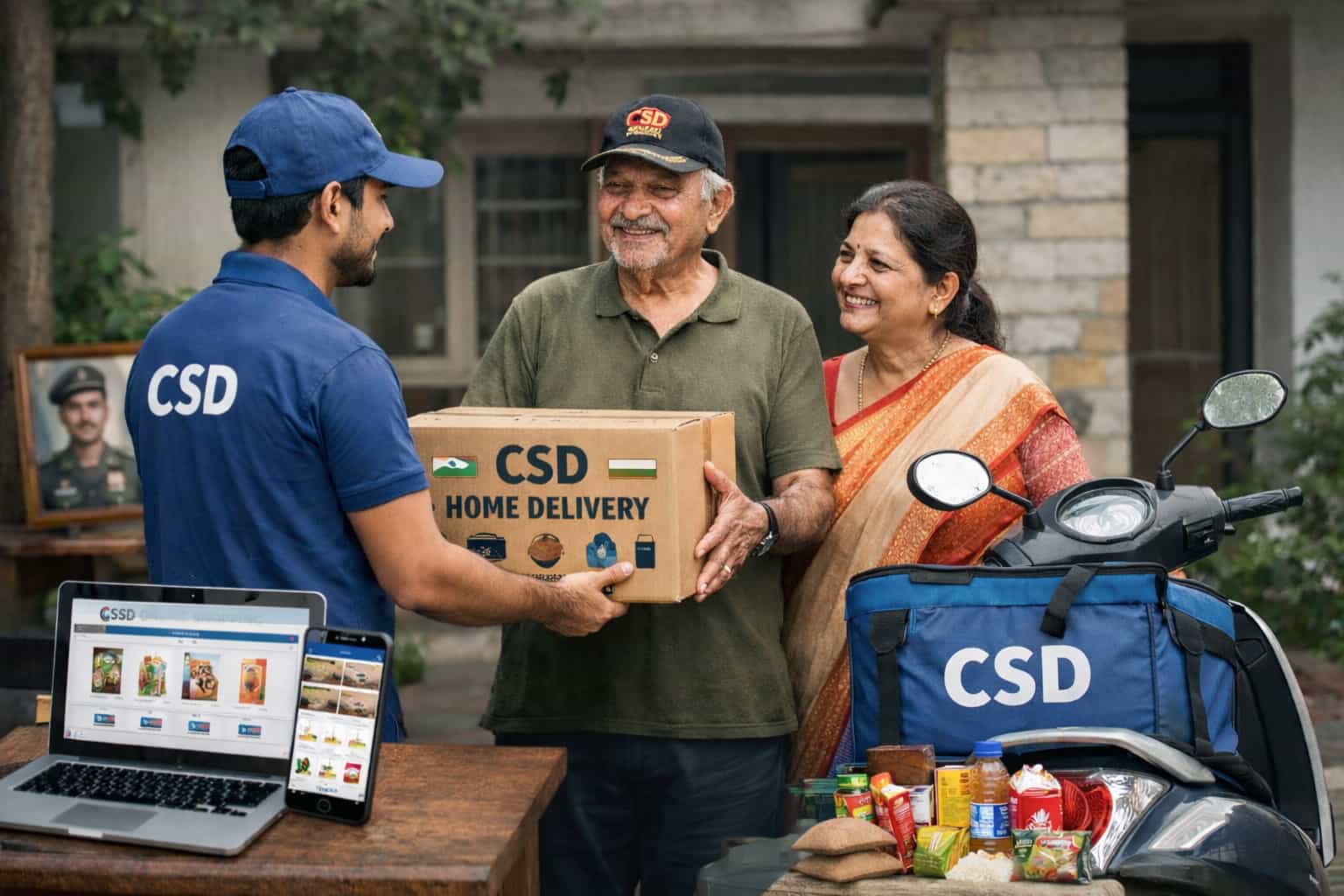
For lakhs of defence families across India, the CSD canteen is much more than a shopping point. It is part of the welfare system that supports serving personnel, ex-servicemen, Veer Naris, defence pensioners and their households. For years, families have depended on the CSD network to buy essential items at more affordable rates. That is why the recent discussion around possible CSD home delivery has created real excitement in the fauji community.
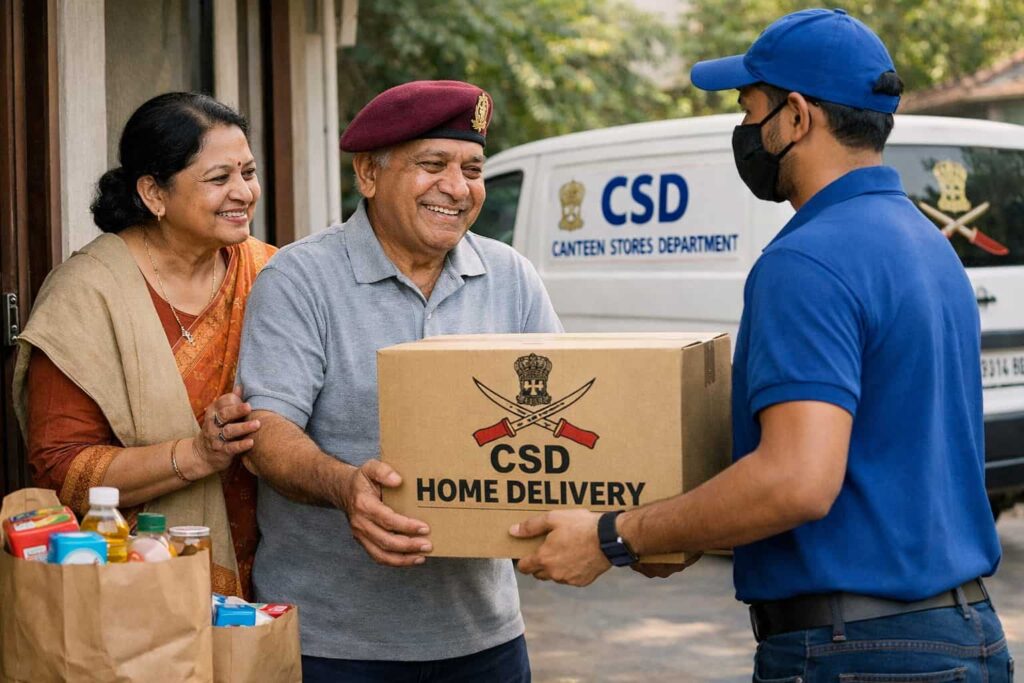
The idea is simple but powerful. If eligible beneficiaries can order canteen items online and get them delivered at home, it could reduce one of the biggest practical difficulties many families face today. A canteen benefit is most useful when it is also easy to access. That is exactly why this possible reform is getting attention.
At the same time, there is one important point that every beneficiary should remember. Right now, official clarity remains the most important thing. Public reports may suggest that an e-commerce style system is being explored, but the final picture will become clear only when the Ministry of Defence or CSD issues an official notification. Until then, this should be treated as a developing welfare update, not a confirmed service launch.
Even so, the discussion matters because it points to a larger shift. Defence welfare systems are gradually moving towards digital convenience. The official CSD ecosystem already has an online presence. The AFD portal is a well-known example, where eligible beneficiaries can purchase Against Firm Demand Category-1 items such as cars, motorcycles, scooters, televisions and refrigerators. This showed that digital systems can be introduced in the CSD framework in a structured way. If grocery and household deliveries are added in the future, it may become the next major step in that direction.
Why does this matter so much on the ground? Because for many beneficiaries, visiting a canteen is not a small task. A monthly canteen run may look routine on paper, but in real life it often means travel, waiting, stock uncertainty and physical effort. In big cities, traffic and parking become part of the problem. In smaller towns, the nearest Unit Run Canteen may be far away. In remote areas, a family member may have to plan an entire day around the visit.
The difficulty becomes even more serious for elderly veterans, widows and families where the serving member is posted away from home. For a retired soldier in a small town, for a Veer Nari managing household responsibilities alone, or for ageing beneficiaries who cannot travel easily, a canteen visit is not always convenient. In such cases, home delivery would not be just a modern feature. It could become a meaningful welfare support.
A well-designed online ordering system can make a real difference here. If beneficiaries are able to log in securely, verify their identity digitally and place an order from home, the process could save time, money and effort. It could also reduce the rush at canteens during peak periods such as salary dates, pension credit days and festival shopping times. Instead of spending hours in travel and queues, families could focus on convenience and predictability.
The biggest strength of such a system would be accessibility. A young soldier posted far from family may feel more assured if household shopping becomes easier back home. A retired JCO or NCO may not have to depend on someone else for regular canteen purchases. A Veer Nari may gain greater independence in managing the home. In this sense, CSD home delivery has the potential to become one of the most practical improvements in defence welfare if it is implemented properly.
But that “if” is very important.
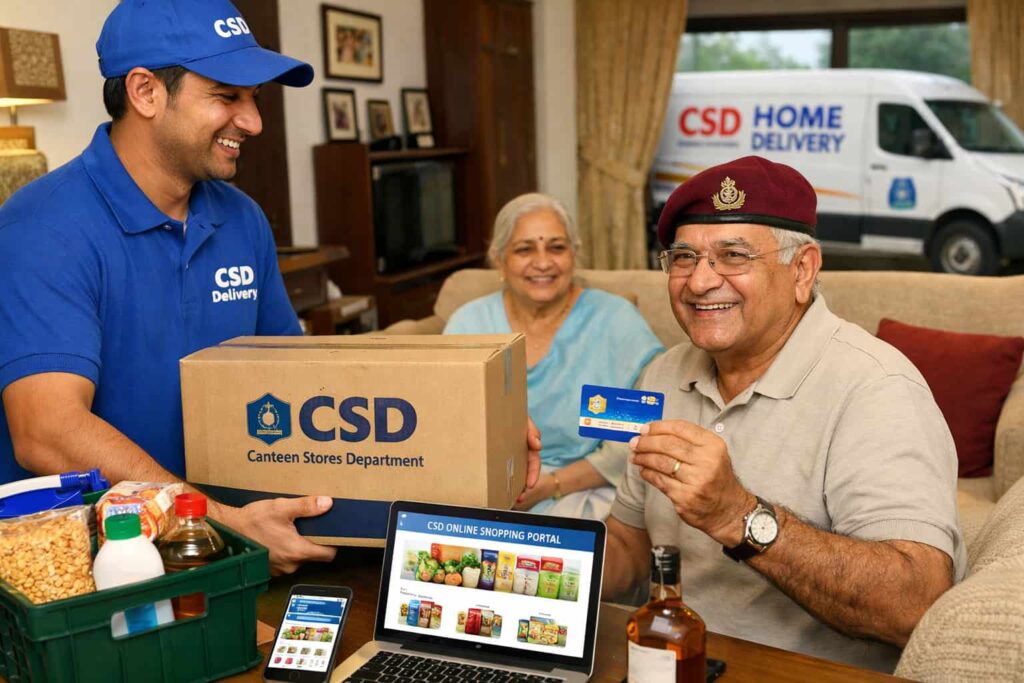
There are still several major questions that need official answers before expectations rise too high. The first is the rollout plan. Will such a system begin with a pilot project in selected cities, or will it be launched nationally from the start? A phased rollout appears more practical because delivery logistics, warehouse support, stock mapping and verification systems would all need testing before wider expansion.
The second big question is product scope. Will the system cover only groceries and daily-use household essentials, or will the range be wider? This matters because many beneficiaries may assume that once home delivery begins, the full CSD basket will automatically become available. That may not happen immediately. Some categories may be included first, while others may remain restricted. Liquor, in particular, would require strict control because it is linked to entitlement, quota and local rules. No beneficiary should assume product inclusion unless an official list is issued.
The third question is cost. Delivery charges may sound like a small detail, but for users they will matter a lot. A flat fee may be easier to understand and budget for. Distance-based pricing may affect people who live far from canteen points. Still, even where a delivery fee applies, many beneficiaries may consider it reasonable if it reduces fuel costs, travel strain and lost time. For senior citizens especially, convenience itself carries real value.
The fourth and perhaps most important area is authentication and fraud prevention. Any digital welfare platform must ensure that only genuine beneficiaries use the service. That means secure login, smart card linkage, OTP verification, registered mobile integration and careful identity checks may all become part of the process. Beneficiaries must be alert here. Whenever a welfare service moves online, fake apps, fake links and fraudulent middlemen often appear quickly.
This is why caution is as important as convenience. Nobody should share OTPs, CSD card details, Aadhaar copies, passwords or registration data with unknown callers or unofficial agents. Beneficiaries should trust only official communication channels. If a delivery portal or app is announced in future, it should be verified only through the official CSD website, recognised Ministry of Defence communication, or trusted government sources.
There is also an operational side to this idea that cannot be ignored. A portal alone will not make the system successful. The service will need reliable stock updates, accurate billing, secure payment options, proper delivery tracking and a complaint mechanism that actually works. If an item is missing, damaged, expired or wrongly delivered, there must be a clear resolution process. If these support systems are weak, user confidence will fall quickly.
That is why the real test of CSD home delivery will not be the announcement itself, but the quality of execution. Defence families do not need just a digital platform. They need a dependable one. Convenience must come with transparency, security and accountability.
For now, beneficiaries would be wise to stay practical. Keep your CSD details updated. Ensure the registered mobile number is active. Follow only official updates. And most importantly, do not circulate or trust unverified WhatsApp messages just because they look attractive or urgent.
The possibility of CSD home delivery is genuinely important because it connects welfare with dignity and ease. It recognises that access matters as much as entitlement. If implemented properly, it could transform the monthly shopping experience for lakhs of defence families across India.
The proposal may still be at a discussion stage, but its potential is clear. For serving personnel away from home, for elderly veterans, for Veer Naris, and for families managing daily needs with limited time and mobility, doorstep access to CSD items could be a major relief.
The idea is not just about online shopping. It is about making an old and trusted welfare system more responsive to present-day needs. And if that happens with proper safeguards, CSD home delivery could become one of the most appreciated reforms for the defence community.