

The 8th Pay Commission has now become one of the most closely followed subjects for central government employees, pensioners, family pensioners and defence personnel. Every new update creates excitement, but this is also the stage where people must stay alert, because not every figure being discussed is a final decisioTn.
The real question today is not only whether the 8th Pay Commission will move fast. The bigger question is what employees and pensioners should watch before the final recommendations are made. A pay commission does not only decide salary revision. It can shape basic pay, pension, Dearness Allowance, Dearness Relief, allowances, family pension, commutation, medical benefits and retirement security for many years.
The official process has already moved ahead. The Union Cabinet approved the Terms of Reference of the 8th Central Pay Commission on 28 October 2025, and the Government of India later issued the notification dated 3 November 2025 appointing the Commission. The official 8th CPC website also lists key sections such as Terms of Reference, questionnaire, memorandum submission and online data portal.
This means the discussion has moved beyond only public expectation. The Commission now has to examine pay, allowances, pension and related service conditions before giving its recommendations. But employees and pensioners must understand one important point clearly: demands are not final benefits.
At this stage, many figures are being discussed in public. Staff bodies and employee representatives may demand a higher fitment factor, a new minimum pay, better pension revision and changes in allowances. These demands are important because they influence the debate. But they become meaningful only when the Commission studies them, recommends them and the government accepts them.
One major area to watch is the fitment factor. This is the multiplier that can affect the revised pay and pension structure. Whenever a new pay commission comes, employees naturally want to know how much their basic pay may increase. But no final fitment factor should be treated as confirmed until it appears in the official recommendations.
The second big issue is minimum pay. Minimum pay is not only important for lower-level employees. It becomes the base around which the entire pay matrix is structured. If the minimum pay is revised strongly, it can influence the pay structure across levels. Recent reports say the Staff Side of National Council JCM has proposed a minimum pay of around ₹69,000 and a fitment factor above 3.8, but these are demands submitted before the Commission, not approved figures.
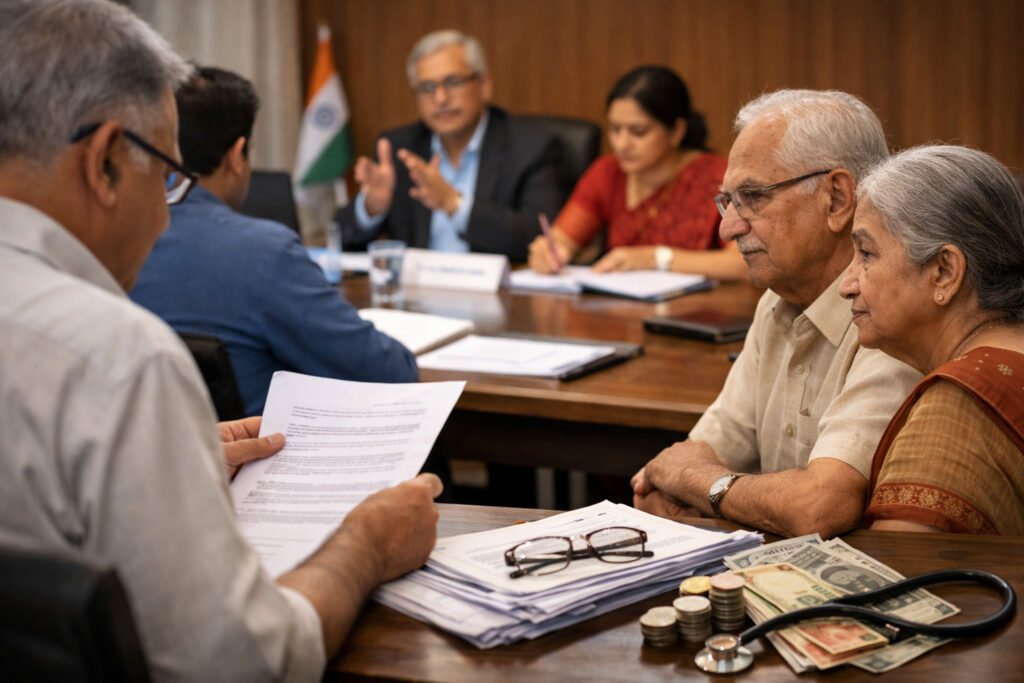
For pensioners, the 8th Pay Commission may be even more significant. Pension revision decides how retired employees manage inflation, medical expenses and household responsibilities. Pensioners should closely watch whether the Commission addresses parity between old and new pensioners, family pension, commutation recovery, Dearness Relief treatment and healthcare support.
Commutation recovery is one of the most sensitive issues for pensioners. Many pensioners believe that recovery continues for too long compared to the actual financial benefit received. If this issue is strongly represented before the Commission, it may become an important part of the pension debate. Similarly, family pension is critical for widows, dependents and senior citizens who rely entirely on pension income.
Another important issue is Dearness Allowance and Dearness Relief. DA and DR are linked to inflation and are revised periodically. Recently, reports said the Cabinet approved a 2 percent DA and DR hike, taking it to 60 percent. This matters because DA and DR levels often become part of the wider pay commission discussion, especially when employees ask whether DA should be merged or considered while revising pay.
Employees should also watch allowances carefully. House Rent Allowance, Transport Allowance, Children Education Allowance, risk-related allowances, defence-related allowances and medical-linked benefits can have a major impact on monthly income. Sometimes the headline discussion focuses only on salary hike, but the final take-home benefit depends heavily on allowances.
For defence personnel and veterans, the impact can be wider. Issues related to pension parity, disability pension, family pension, military service conditions, risk and hardship, and veteran welfare can become major points of representation. Defence families should not only track general employee demands but also defence-specific submissions and pension-related clauses.
The consultation process is equally important. The Commission’s questionnaire, memorandum submissions and staff-side representations will show which issues are being formally placed before the panel. Employees and pensioners should follow official documents, recognised staff-side updates and verified government communications instead of relying only on viral posts or social media claims.
One of the biggest risks during a pay commission period is misinformation. A random chart, expected salary table or viral fitment factor message can easily create confusion. Such content may be useful for discussion, but it should not be treated as a final government decision. A figure becomes reliable only when it is backed by official communication, Commission recommendations or government approval.
The 8th Pay Commission may move faster than many people expected, but speed alone will not decide the final benefit. The quality of representation will matter. The strength of evidence placed before the Commission will matter. The government’s response to recommendations will matter. Most importantly, whether the issues of both serving employees and pensioners are properly addressed will matter.
Employees should therefore track five things closely: the final Terms of Reference, official questionnaire updates, staff-side memorandums, fitment factor and minimum pay proposals, and allowance-related demands. Pensioners should track pension revision, DR treatment, commutation recovery, family pension, CGHS or medical support, and parity-related issues.
In simple words, this is not the time to only wait for the final announcement. This is the time to understand the process. The final report may decide the salary and pension structure for the next decade. That is why employees, pensioners and family pensioners must remain informed, careful and connected with verified updates.
The 8th Pay Commission is not only about a salary increase. It is about financial security, retirement dignity, inflation protection and fairness in public service compensation. The speed of the Commission may surprise everyone, but the real impact will depend on what the Commission finally recommends and what the government accepts.