The 8th Pay Commission story took an important turn after the Union Budget 2026. Not because employees received any immediate benefit, but because the first clear signs of real administrative movement started to appear.
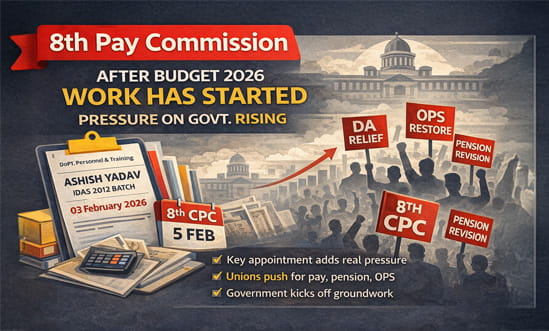
The biggest signal came through a 3 February 2026 appointment move linked to the Department of Expenditure. Ashish Yadav, an IDAS officer of the 2012 batch, was approved for the post of Director in the 8th Central Pay Commission setup on deputation. Within days, his name was reflected in the official 8th CPC directory. That may look like a small internal change, but in government processes, such moves matter. They show that the system is beginning to shift from a headline announcement to actual institutional setup.
This is why the development is more important than it may seem at first glance. The 8th CPC is not just about one future salary increase. Before any final decision can happen on fitment factor, pay matrix revision, pension revision, or allowances, the Commission needs a functioning structure. It needs staff, files, coordination, consultations, and a system to collect and study stakeholder inputs. In short, the framework has to be built before the recommendations can take shape.
That is exactly what makes this phase interesting. For months, many employees and pensioners were watching the 8th CPC mostly through expectations and speculation. But this appointment showed that the process had started gaining administrative form. The government was not yet delivering pay relief, but it had begun strengthening the machinery that would eventually prepare the report.
At the same time, employees were clearly not in the mood to wait silently. The period after the Budget also saw growing pressure from unions and federations. Their focus was not limited to the final fitment factor alone. They raised wider issues such as interim relief, pension fairness, DA/DR treatment, anomaly removal, OPS versus NPS, and the need for faster visible progress. That means the 8th CPC debate is now moving on two tracks at once. One track is official preparation. The other is employee pressure.
The official record supports this view. The 8th CPC website later opened structured channels for memoranda, representations, and stakeholder suggestions. It also ran a questionnaire process through MyGov up to 31 March 2026. These were not symbolic steps. They showed that the Commission had moved into a consultation-based working phase where inputs from employees, pensioners, associations, ministries, and other stakeholders were being gathered in an organised way.
This is an important point for readers to understand. The current stage of the 8th Pay Commission is not the stage of final approval. It is the stage of groundwork. The engine has started, but the destination is still ahead. That is why there is movement in the system, but no final word yet on salary revision, pension revision, or fitment factor.
The picture became even clearer as the process moved forward. Reports later indicated that the NC-JCM drafting committee was set to meet on 13 April 2026 to finalise the common memorandum for the 8th CPC. Meanwhile, the official website continued to show consultation-related steps such as the planned Dehradun visit on 24 April. Seen together, these developments make one thing clear: the February appointment was not an isolated event. It was one of the first visible signs that the 8th CPC had moved beyond paper notification and into structured preparation.
For readers, the takeaway is simple and important. Budget 2026 did not deliver direct 8th Pay Commission relief. But what followed was still significant. The Commission’s internal structure began taking shape, and unions increased pressure on the government over key issues that matter to employees and pensioners. So the real story is not that benefits arrived after the Budget. The real story is that the government started building the 8th CPC from inside, while employees began pushing harder from outside.
That combination makes the next phase crucial. The coming months will likely be shaped by two things: how seriously the government advances the Commission’s work, and how strongly employee bodies keep demanding action on pay, pension, OPS, DA/DR, and interim support. That is where the real 8th CPC battle now stands.
Watch Our Full Video for Complete details!